“It was the best of times, it was the worst of times, it was the age of wisdom, it was the age of foolishness, it was the epoch of belief, it was the epoch of doubt, it was the season of Light, it was the season of Darkness, it was the spring of hope, it was the winter of despair, we had everything, we had nothing, we were all going direct to Heaven, we were all going direct the other way – in short, the period was so much like the present one that some of its noisiest authorities insisted on its being compared with others, for good or for evil, only by using the word “more”.”
What we live through at every paradigm shift, and what is worth remembering as we live through it: the very opening words of A Tale of Two Cities by Charles Dickens, the successful social reformer and writer of his era… It is the story of those who, despite all the hardships of life, struggle for their own honour and their own ideas. Everyone who reads this novel is bound to touch the reflections of their own life.
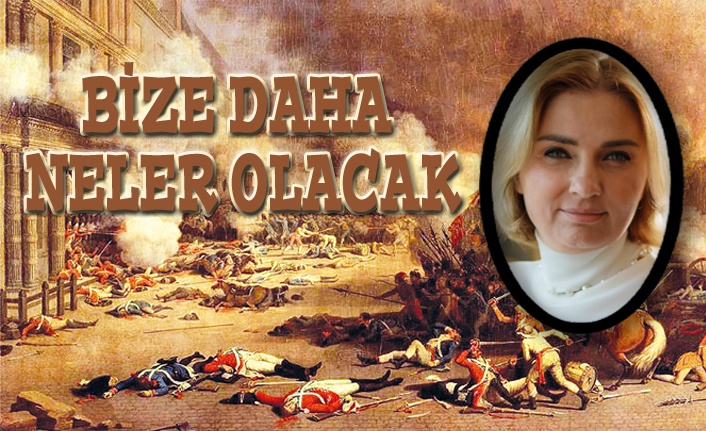
“We had everything before us in order to live, and we had nothing before us in order to live.”
Paradigms leave their formation to time; they are quite patient, indeed so patient that we never think about it at all and cannot notice them in the course of their formation! Between nothing and something, with a barely perceptible force, they set to work saying “Ya Nasip” … the effort to appear usual and ordinary is society’s curtain. While society, with its own conditionings, carries on eating and drinking, the most political effort of existence of the day, the paradigm develops within this time, grows, and gains certainty and objectivity. By the time society notices, it has penetrated to the very depths of the cells. Now this paradigm needs a science, and also the council of that science.
Paradigm shifts take place in very particular periods. These periods of transition hurt the individuals of society a great deal. They leave deep marks. They go down to the deepest levels of society and bring to light all the data, processed or unprocessed, that belong to the previous period, have taken root in society and are stored in its knowledge base.
“Social crisis: the effects of traumatic events experienced on a mass scale upon society and upon the individuals who make up society begin to be lived at an uncontrolled level. Social traumas, actions resulting in loss and in physical and psychological damage, the stories left behind by events that develop out of a process beginning with a small incident and that have an effect on a particular group and on the individuals who make up this group… In these stories, which leave deep wounds in individuals, the consequences of the effect of the events leave deep emotional wounds, for generations, on the community and on the belief and identity that make up the community. In regions where trauma is constantly fanned, social life, institutions and therefore the social fabric will lose their natural structure entirely.
With society’s process of deep crisis and its effects, normal science, which has settled into the database of life, begins to move into the act of breaking away from the existing paradigm. What is pointed to as normal science, “our habits, our social conditionings”, is bound tightly to the paradigm until the new period, the moment of revolution, arrives.
Yes, what has happened Now that normal science has dared to abandon the existing paradigm and has caused the beginning of a revolution? The secret of this question lies, again, in the essence of normal science… So how can we reach this secret?
By thinking!
(Late Latin: substance, from Greek hupostasis foundation, from huphistasthai to stand under, from hypo- + histanai to cause to stand) – Understand
By going down to the source of the essential matter and, staying there in the essence of the matter, trying to understand. By remaining for a moment in the depth to which we have been lowered in the process of change, asking, questioning, thinking …
“What happened to us?”
While in the first months of entering the year 2020 we were making cheerful jokes about “Twenty Twenty”, in March we at first supposed we were going through something like a snow holiday; we became aware of the melodies of it-is-spring-outside only when we could not spoon up the Hıdırellez pilaf. It turned out that the name of the holiday was not snow; it was an indefinite quarantine for whoever received a free Solar corona…
If we return briefly to A Tale of Two Cities; it is a nineteenth-century novel that takes as its subject what happened in Paris and London in the process leading up to the French Revolution. Dickens wrote a novel that is still alive, portraying the people of these two cities, their living conditions and their loves with their own realities and with the reflections of a social reformist point of view.
” Yes, I know that little time is left. It is coming. It is on its way now. I can feel it. It never stops. Nor does it go back. It keeps advancing. Look at this world we are in. Do you think everything will stay the same? That is really very funny.” A Tale of Two Cities, C. Dickens Social life is constantly in a state of development, change and transformation. If any development is a two-way process, then progress, that is, a development moving further on from the starting point, from the very bottom towards the height, from simple intelligibility towards a more complex, more perfect, advanced, new and better change, is what it should be… Like the transformation of the Caterpillar into the Butterfly.
Yes, Now What Has Happened to Us?
– Have We Become a Network Society?
“Connecting People”
And What Else Will Happen to Us?
– The Information and Knowledge Society
“We will be connected more”
Keywords: Nurfer Tercan Paradigm C. Dickens Big Data
Translated from the Turkish original.