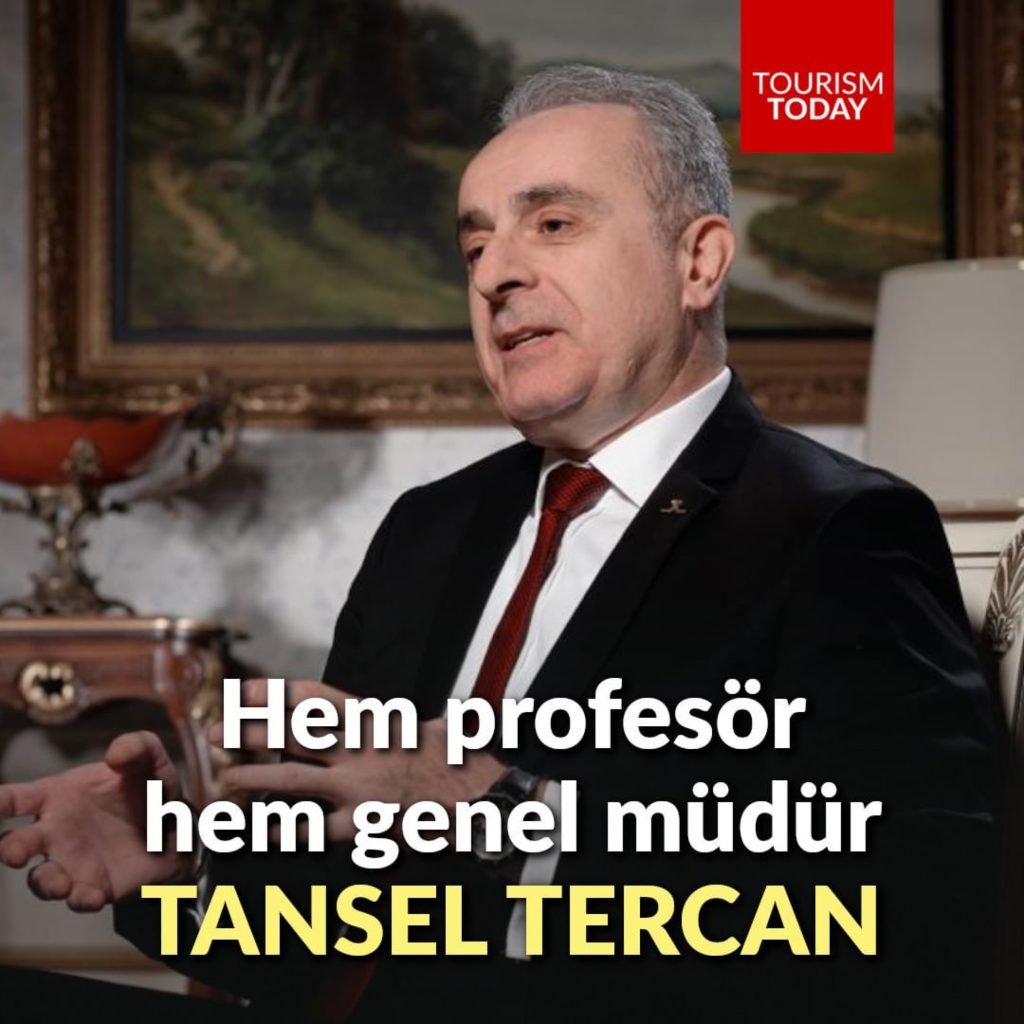
Prof. Tansel Tercan, whom we know as a tourism professional and who is currently General Manager of Rixos President Astana, the Rixos Hotels property in Kazakhstan, also stands out as an educator. Answering the questions of Tourism Today News Editor Tuncay Sevin, Prof. Tercan made important remarks on tourism and education.
Tuncay Sevin / Tourism Today

You have been a manager at Rixos Hotels for many years. We know you as a tourism professional. Could you tell us about yourself and your educational career?
I was born in Istanbul in 1968. I graduated from 50. Yıl Tahran High School. For 16 years I played volleyball professionally for Istanbul first-league teams. Alongside my sporting life, I completed my studies at the Department of Business Administration of Anadolu University. In 1995 I moved from volleyball to the tourism sector and, since it was my area of specialisation during my university education, I turned to developing my career starting in the finance department. Since 2004, for 19 years, I have continued my working life as a General Manager at Rixos Hotels, which has positioned itself best among international chain hotels. In 2014 I began my academic work with a Master’s Degree at Akdeniz University. Immediately afterwards, at the United Campus Of Malta, I continued my education as a Bachelor Degree in the Business Administration department, in Business, my field of professional expertise, in the area of managerial sales and marketing strategies. Completing my education at UCM, I received from UCM the title of Professor in the field of Managerial Sales and Marketing Strategies. In 2021 I completed my doctoral studies in the Department of Tourism at L.N. Gumilyov Eurasian National University.
At present, while continuing my duties as General Manager at the Rixos President Astana hotel in Kazakhstan, I am at the same time actively serving in the academic field as Advisor to the Rector of Antalya Bilim University, Member of the Board of the International University of Tourism and Hospitality, Turkistan / Kazakhstan, and Member of the Board of L.N. Gumilyov Eurasian National University, Astana / Kazakhstan.

Tourism or education. When you could have chosen one of the two, why did you take the hard road by choosing both?
In fact, it is almost impossible to keep tourism and education apart. These two important themes should be intertwined, because they can bring many benefits both to the sectors and to society.
Cultural exchange: Tourism offers people from different backgrounds the opportunity to come into contact with new cultures, traditions and ways of life. By integrating educational aspects, tourists can gain a deeper understanding and appreciation of local culture and heritage. This encourages tolerance, understanding and the breaking down of stereotypes.
Knowledge transfer: Including educational elements in tourism allows visitors to learn about various subjects such as history, art, architecture and nature. It provides a platform for the exchange of knowledge and helps spread awareness of the importance of different destinations.
Skill development: Educational tourism can offer skill-development opportunities focused on specific areas such as language learning, culinary arts, traditional handicrafts or sustainable practices. These skills acquired while travelling can have long-lasting benefits for individuals and communities.
Conservation and stewardship: Educating tourists about the natural and cultural resources of a destination can create a sense of responsibility and encourage sustainable practices. Visitors who are informed about the environment, conservation efforts and local traditions are more likely to support initiatives aimed at conservation.
Economic impact: The intertwining of tourism and education can also have positive economic effects. It can stimulate the local economy by attracting more visitors, creating employment opportunities and generating income for educational institutions. This in turn can help raise the quality of education and contribute to the overall socio-economic development of the destination.
By combining tourism and education, destinations can offer more enriching experiences for travellers, encourage respectful interactions and promote sustainable development. The intertwining of these sectors can create a win-win situation for all the stakeholders involved.
Managers who deal with both tourism and education may face challenges and advantages that are particular to them.
Challenges:
– Balancing priorities: Since both tourism and education require significant attention and resources, managing two different sectors can be difficult.
– Different goals: While tourism focuses on attracting visitors, promoting destinations and maximising revenue, education aims to provide learning opportunities and encourage academic growth. Bringing these goals into harmony can be complex.
– Seasonality and demand: The tourism industry can be exposed to fluctuating demand due to seasonality or external factors (for example, a pandemic). Managers need to adapt their strategies accordingly.
– Regulatory requirements: Both the tourism and the education sectors are subject to different regulations, certifications and compliance measures. Meeting these requirements can be time-consuming and burdensome.
– Resource allocation: Managers must allocate resources effectively to meet the needs of both the tourism and the education sectors, such as staffing, budgeting, infrastructure and technology.
Advantages:
– Synergy: Opportunities for synergy can arise between the tourism and education sectors. For example, educational tours, study-abroad programmes or collaborative projects can enhance the educational experience by introducing students to real-world tourism scenarios.
– Diversification: Managing both the tourism and the education sectors allows for the diversification of revenue streams, which can provide stability and a buffer against risk in a constantly changing industry.
– Collaboration opportunities: Managers can take advantage of partnerships and collaborations between tourism and educational organisations to improve the services they offer, create innovative programmes and share resources.
– Employment opportunities: Combining the tourism and education sectors can create additional job opportunities for professionals with interdisciplinary expertise, contributing to local economic growth.
Overall, managers involved in both tourism and education face the challenge of balancing different goals, regulations and resource allocation. But at the same time it also offers opportunities for synergy, diversity, collaboration and growth in employment.

How would you assess the contribution of your identity as an educator to your identity as a tourism professional, and of your identity as a tourism professional to your identity as an educator?
My identity as an educator has contributed greatly to my tourism identity by providing a deep understanding and knowledge base about various destinations, cultures and tourist sites. Educators generally have the ability to research, analyse and disseminate information effectively, and this can enhance the travel experience. By offering valuable information and historical context, they can enable tourists to better appreciate the places they visit.
In addition, educators can encourage and motivate others to discover new destinations and take part in educational travel experiences. Their expertise and their passion for learning can encourage individuals to seek experiences that go beyond the typical tourist sites, leading to a more meaningful and authentic exploration of a place.
On the other hand, my identity as a tourism professional has also contributed to my identity as an educator. By experiencing different cultures, traditions and different points of view during my travels, I broadened my knowledge base, and the first-hand experiences I shared with people of different cultures made me realise what their expectations are. Understanding the guest’s expectations before they ask, the services offered make the guests’ happiness unique. These encounters can enrich an educator’s ability to make lessons more relatable, engaging and culturally inclusive.
Moreover, travel experiences can also introduce educators to innovative teaching methods and educational practices used in other regions or countries. They can learn about different education systems, approaches and techniques that can shape their own teaching strategies and help them offer their students a more comprehensive education.
In short, the identities of educator and tourism professional benefit one another mutually. While the educator identity can contribute by providing knowledge, inspiration and the ability to offer meaningful travel experiences, the tourism identity contributes by enriching an educator’s knowledge base, teaching methods and cultural understanding.
In May 2021, in Antalya, the capital of Turkish tourism, we signed a cooperation protocol between Antalya Bilim University, which provides education at an international level, and the universities of Kazakhstan, with the aim of training the tourism professionals of the future.
In the programme launched under the leadership of the Rixos Hotels Academic Board, within the framework of the cooperation protocol signed between the universities of Kazakhstan and Antalya Bilim University, young Kazakhs, as students of the Faculty of Tourism of Antalya Bilim University, both took courses at the summer school and gained work experience by working at Rixos hotels in Türkiye with on-the-job training.

The protocol, signed in Antalya on 15 April 2021 and hosted by Antalya Bilim University and Rixos Hotels, was attended by delegations from the following educational institutions: L.N.Gumilyov Eurasian National University, Kazakh University of Technology and Business, Akhmet Yassawi International Kazakh-Turkish University, Al Farabi Kazakh National University, Almaty Sports and Tourism University, Yessenov University, Kazakh Swiss American College, Kazakh Professional College and Mangistau College of Tourism.
Thanks to the ABU TELP (Antalya Bilim University, Tourism Experiential Learning Program) project, which offers young Kazakhs an important opportunity for education and work experience, the educated and qualified human resources that Kazakhstan’s tourism needs have begun to be trained.
In the ABU TELP programme, in order to ease the students’ adaptation to cultural change, Rixos hotels contributed to the students’ success by inviting supervising teachers from Kazakh universities. At the same time, academics of the Faculty of Tourism of Antalya Bilim University visited the students regularly at the properties and carried out inspections both of the R-USTA (Rixos Uzmanlığa Sahip Takım Arkadaşı – Rixos Team Member with Expertise) on-the-job training and of the working environment. The Rixos Hotels Human Resources Department and the Learning and Development officers ensured that, in addition to their on-the-job training, the young people received foreign-language and personal-development training, and followed them closely.
We have reshaped the unprecedented social, economic and environmental challenges brought about by globalisation and the acceleration of technological developments. At the same time, this situation has offered us countless new opportunities for human development. Seizing the opportunities and finding solutions is our shared responsibility. One of the most important problems of the tourism sector is the shortage of trained, qualified employees. And the way to solve the problem of qualified employees is cooperation by universities, at an international level, with other universities and with companies operating in tourism.
I would like to say that I am happy to have put my signature to this cooperation, increasing the number of trained tourism employees that Kazakhstan needs, giving the tourism professionals of the future sectoral experience and ensuring their development, and enabling them to build new relationships.
Tourism is a matter of the heart; we are proud to contribute to the training of young tourism professionals who work from the heart, to have taken on the role of an important bridge between the two countries in the field of tourism, and to be one of the institutions that pioneered the project.
Within the scope of the cooperation, the ABU TELP applications coming from the universities of Kazakhstan were evaluated, and digital and face-to-face interviews were held. The selected students were enrolled in the Faculty of Tourism of Antalya Bilim University, and as of the first week of June 2021 the first students began to go to the Rixos hotels operating in Türkiye.
The students’ travel to and from Türkiye, their visa costs, and their accommodation, food and beverages, uniforms and Antalya Bilim University tuition expenses during their stay in Türkiye were covered by Rixos Hotels. At the same time, in addition to the opportunity to study at the summer school, they were paid for every month they worked.
The Kazakh students took classes on an online platform at the Faculty of Tourism of Antalya Bilim University for 16 hours a week over 7 weeks, between 12 July 2021 and 27 August 2021, and in the 8th week they sat their final examinations. The students attended the online classes in the training rooms of the hotels and also received their practical training in the hotels. The Kazakh students who gained work experience at the Rixos hotels in Türkiye were given a guarantee of priority employment at the Rixos properties in Kazakhstan.
Education is not the imparting of facts to people. It is the training of the mind to think and to turn what is taught into experience. Our goal in this project is to bring into the sector the talented minds of tomorrow, who will be able to give direction to the Service Sector and apply methodical working systems.

As a tourism professional you are not only a hotel manager; you also represent Türkiye and Rixos Hotels in Kazakhstan. This increases your responsibility, doesn’t it?
The ambassador-like work of hotel general managers working abroad can be assessed by taking several key factors into account.
Diplomatic skills: This assesses the ability to represent the hotel brand and to build relationships with key stakeholders such as local authorities, businesses and guests from various cultures. It reinforces their effectiveness in communicating and resolving conflicts or cultural differences that may arise.
Cultural sensitivity: This assesses the level of understanding of and respect for the local culture and traditions. It shows their efforts to include local traditions and practices in the hotel’s operations, services and guest experiences as well.
Business development: They make efforts to identify and take advantage of market opportunities abroad. They put into practice their ability to establish partnerships and collaborations with local businesses, tourism boards and other relevant organisations in order to increase revenue and strengthen the hotel’s competitiveness in the international market.
Staff management and training: This provides the leadership skills for managing an international team. It assesses their efforts to give employees cultural and language training, create a positive working environment and ensure the retention and development of staff.
Guest satisfaction: This takes guest feedback and reviews into account in order to measure the extent to which the general manager and his or her team deliver exceptional customer service tailored to the unique needs and expectations of international guests.
Sustainability and corporate social responsibility: This assesses their commitment to sustainable practices, local community involvement and ethical business operations.
Financial performance: This assesses the ability to ensure the hotel’s financial success while adhering to international accounting standards and managing exchange-rate risks.
In order to support growth and development in the ambassador-like role, it is important to establish clear assessment criteria and to give the general manager regular feedback. In this context I can say with complete peace of mind that the Rixos business card is my true identity, a universal identity; wherever I go in the world, there is no door it cannot open, without any need for a visa. This power both brings honour and places on my shoulders the responsibilities of carrying this brand as it deserves.
Let us not forget! Our name finds its place in society and gains an identity through the values of the institution to which we belong.
We call the individual who is within society an actor. An actor is an individual who has acquired a social character. We call the individual an actor because he or she is given roles determined by society. These roles, such as the role of mother, father, child, student, civil servant, superior or politician, determine what society expects of the person in that role.
A person generally has various roles within society. Society puts pressure on him or her to fulfil the requirements of these roles. The actor is now an individual who lives in society and is influenced by society. And the entity that emerges when actors come together and influence one another we call a social system. A social system is actors who are together and who influence one another.
Every actor performs according to the script of his or her role. Our role, in the world of Rixos, in the management of the cities for which we are responsible, is to be able to manage virtuously by being knowledgeable, being trustworthy, with determination, courage and moderation, discovering ourselves and bringing out the successful quality within us.
Managers spend a long time, even years, analysing their failures. In fact, failure is never a bad experience. It is simply an art of learning. In hospitality you have to read the game well. People of different cultures from various countries of the world visit our properties. Just as in sporting contests involving team play a separate tactic and advance preparation are made according to the characteristics of each opponent, so, since hospitality too involves team play, preparation must be made in advance according to the characteristics of the guests who are coming. Tourism businesses that possess knowledge of their habits of social life, including their culture, language, customs and traditions, always start the match 1-0 ahead.

As you know, there is a serious staff shortage in Türkiye. Qualified and trained tourism staff in particular are at the point of running out. As an educator and tourism professional, what solution would you propose on this issue?
As an educator and tourism professional, I understand the difficulties created by the staff shortage in the tourism sector in Türkiye. I have a number of proposals for solving this problem.
Encourage tourism education: Encourage more young people to pursue education and a career in the tourism sector. This can be achieved through awareness campaigns in schools that highlight the benefits and opportunities available in the sector.
Cooperate with educational institutions: Establish partnerships between tourism organisations and educational institutions in order to design curricula suited to the needs of the industry. This will ensure that students are equipped with the relevant knowledge and skills to meet the demands of the tourism sector.
Development of vocational training programmes: The development and improvement of vocational training programmes aimed specifically at tourism staff. These programmes can provide practical skills and on-the-job training to prepare individuals for various roles in the sector.
Encourage internships and apprenticeships: Make it easier for students and graduates to gain practical experience through internships and apprenticeships. This will give them valuable hands-on training and introduce them to the realities of the tourism industry.
Supporting professional development: Encourage continuous learning and professional development among existing tourism staff through workshops, seminars and certificate programmes. This will help them improve their skills and keep up with sector trends.
Improve working conditions and incentives: Recognise the hard work of tourism professionals by improving working conditions, providing competitive salaries and offering incentives aimed at keeping talent within the sector.
Encourage international cooperation: Explore partnerships with international organisations and educational institutions in order to exchange knowledge and experience. This can bring in expertise from other countries and promote global best practices in the Turkish tourism industry.
Develop a sustainable tourism model: Promote sustainable tourism practices in the industry by emphasising the importance of responsible tourism and the long-term positive effects it can have on the economy and the environment. Since this is in harmony with the values of many individuals today, more talent can be attracted to the sector.
By implementing these solutions, we can work to ease the staff shortage and ensure the availability of qualified and trained tourism professionals in Türkiye.
You also have a book entitled “Waste Management in the Hospitality Sector”. How much importance do hotels attach to waste and recycling? Would you make a call to hotels on this point?
We cannot change the past, but we can change the future. True recycling lies in our world, which advances, changes and transforms at every moment, in the power of knowledge that, through the awareness of a virtuous society, is a light for tomorrow. My humble appeal to those who have given their hearts to recycling for a liveable world might be this.
In recent years hotels have recognised the importance of waste and recycling and are making an effort to prioritise these practices. Many hotels now have comprehensive waste management plans to minimise their environmental impact.
Here are some recommendations and best practices for hotels to manage waste effectively: Implement a comprehensive recycling programme: Set up dedicated recycling bins throughout the hotel for separating different waste streams such as plastic, paper, glass and metal. Label these bins clearly and provide staff and guests with adequate education and training on what can be recycled.
Minimise single-use products: Reduce dependence on single-use products such as plastic bottles, straws and bathroom amenities. Encourage guests to bring their own reusable bottles and provide water refill stations. For toiletries, choose refillable dispensers instead of individually packaged ones.
Compost organic waste: Set up a composting system for the food waste generated in the hotel’s kitchen and dining areas. This will help divert organic waste from landfill and can be used as fertiliser for gardens or donated to local farms.
Engage with suppliers: Work together with suppliers to reduce unnecessary packaging and explore options for recyclable or sustainable packaging materials. Consider partnering with environmentally friendly suppliers that prioritise environmental sustainability.
Encourage energy-efficient practices: Implement energy-saving measures throughout the hotel, such as using energy-efficient lighting, installing motion sensors in common areas and encouraging energy saving among staff and guests. By reducing energy consumption, you indirectly reduce the waste in energy production processes.
Optimise waste collection and disposal: Review waste collection schedules and local recycling guidelines to ensure compliance and the efficient removal of waste. Consider partnering with waste management companies that prioritise recycling and environmental sustainability.
Educate staff and guests: Hold regular training sessions to educate staff on best practices in waste management. Emphasise the importance of reducing, reusing and recycling. Also educate guests, through signage, brochures or in-room materials, about the hotel’s waste reduction efforts and how they can contribute by following environmentally friendly practices.
Monitor and measure waste data: Track waste data regularly in order to identify areas for improvement, set targets and measure progress. Analyse the data collected in order to identify trends and make adjustments to waste management strategies accordingly.
Effective waste management also offers economic opportunities. It can create employment in the waste collection, sorting and recycling industries. Moreover, the recycling sector, by generating income through the sale of recycled materials, encourages economic growth and reduces dependence on imports of raw materials. Public awareness and education are essential for successful waste management initiatives. Encouraging individuals and businesses to adopt responsible waste disposal practices, such as separating recyclable waste from general waste, composting organic matter and minimising the use of single-use plastic, can make a significant difference in reducing waste generation. In conclusion, waste management is necessary in order to protect our environment, conserve resources, reduce pollution, create economic opportunities and promote sustainable development. By encouraging responsible waste practices, we can contribute to a cleaner and healthier planet for future generations.
Translated from the Turkish original.