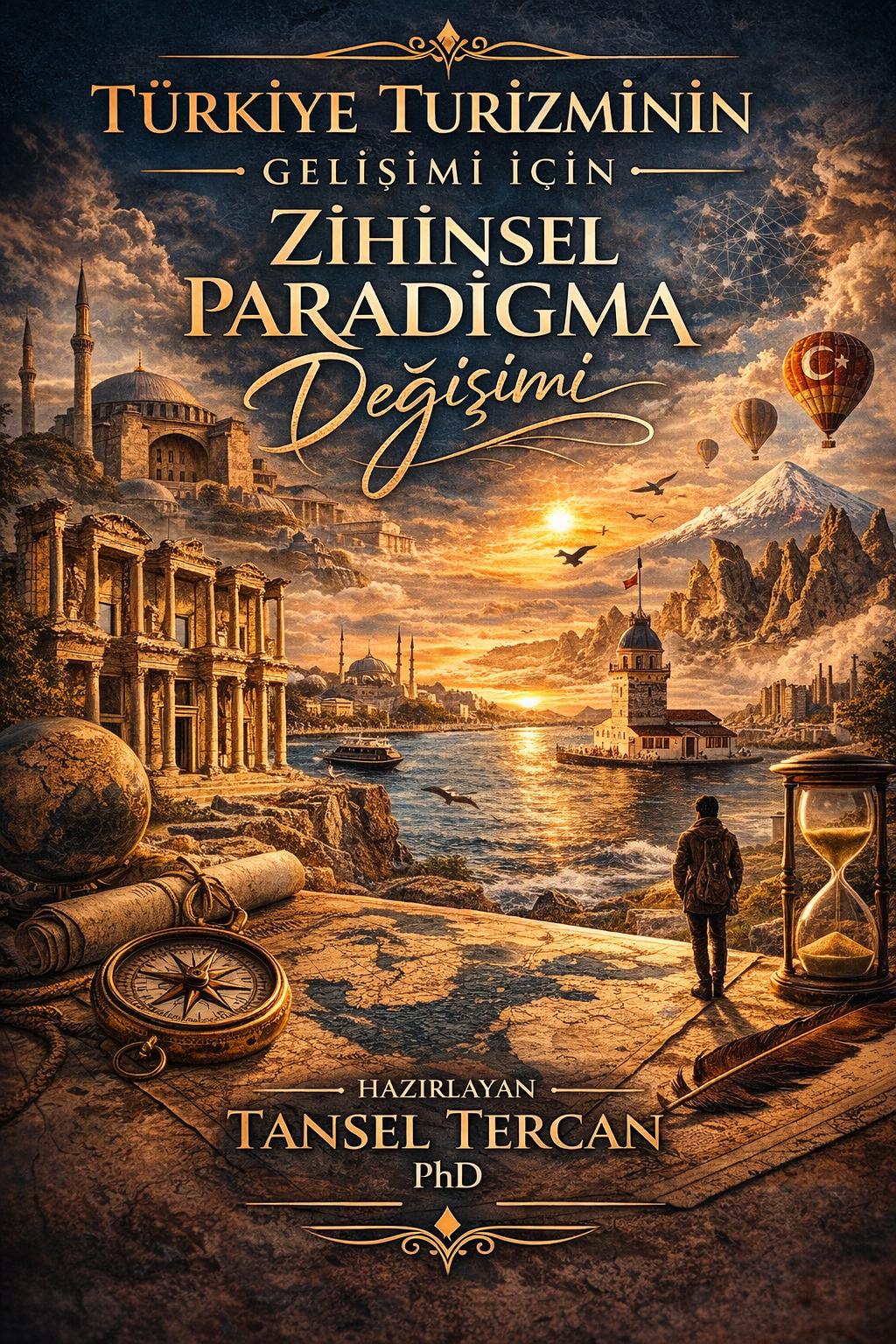
For many years the tourism sector defined growth through measurable metrics: visitor numbers, occupancy rates, average room rates and per capita spending. These indicators are of course critically important. Yet tourism competition in the 21st century is now shaped not only by the economy of volume, but by the economy of meaning.
Today’s traveller does not simply want to go to a destination; they want to become part of that destination’s story. This change raises an important question for tourism leaders.
How can Türkiye’s tourism transform its growth strategy from quantity to a quality-based experience economy?
This question should lie at the centre of the strategic debate that will determine the future of tourism in Türkiye.
The Transition from Volume-Oriented Tourism to the Experience Economy
Türkiye has one of the strongest tourism infrastructures in the world. Resort tourism on the Mediterranean and Aegean coasts has created a capacity able to compete on a global scale. However, the transformation taking place in global tourism demand makes it necessary to rethink this model.
Today’s tourists now travel with three different expectations:
- authentic experience
- cultural connection
- personal transformation
At this point Türkiye’s advantage is not only its natural beauty, but also its historical depth. The geography of Anatolia is one of the centres where the history of human thought took shape. For example, Heraclitus, one of the philosophers who radically changed thought in the ancient world, lived in Ephesus and carried the concept of “change” to the centre of philosophy.
This historical depth makes it possible to redesign tourism not merely as a recreational activity, but also as an intellectual experience.
Türkiye’s Least Used Competitive Advantage: Layers of Civilisation
Many countries possess natural beauty. But very few countries possess layers of civilisation as dense as Türkiye’s.
This historical continuity, stretching from the Hittites to the Romans and from the Seljuks to the Ottomans, is in fact a unique strategic advantage for tourism. Yet this advantage is often lost within destination-based marketing. The new approach on the rise in global tourism, meanwhile, is “narrative destinations”, that is, destinations built on a narrative. In this model visitors do not merely tour a city or a museum; they step inside a story.
For example;
- Ephesus is not merely an ancient city, but the centre of thought of the ancient world
- Konya is not merely a city, but the place where the universal message of Sufism was born
One of the names that comes to mind when Konya is mentioned is Rumi. His thought is today a cultural and philosophical point of reference in many parts of the world. Intellectual legacies of this kind are powerful narrative fields that can increase the cultural depth of tourism
The New Luxury: Silence, Slowness and Time
For a long time the concept of luxury in the tourism sector was defined by physical features: larger rooms, more magnificent architecture, more services. For today’s high-income travellers, however, luxury now carries a different meaning.
The new luxury consists of three elements:
- time
- privacy
- silence
This trend grew even stronger in the post-pandemic period in particular. People are now looking for calmer and deeper experiences rather than crowds and packed schedules. Türkiye has a geography extremely well suited to this transformation. The valleys of Cappadocia, the small coastal towns of the Aegean and the highland plateaus of the Black Sea could in fact be strong destinations for “slow tourism” on a global scale. This approach can carry Türkiye’s tourism not only to volume growth, but to value growth.
The New Leadership in Tourism: Experience Architecture
In the future of the tourism sector, the understanding of leadership is changing as well. Tourism executives are no longer merely professionals who manage operations; they are also experience designers. What successful destinations have in common is this. They do not merely offer a service, they create a story.
This approach signifies a critical transformation in the hotel industry in particular. Hotels are no longer just places of accommodation; they are becoming the centres of the destination experience.
For this reason, three strategic competencies come to the fore for the tourism leaders of the future:
- storytelling and brand identity
- cultural integration
- emotional experience design
The combination of these three areas will enable a destination to differentiate itself in global competition.
A Strategic Roadmap for Türkiye
For Türkiye to move up to a higher league in tourism, infrastructure investments alone are not enough. A strategic vision of experience is also required.
We can shape this vision along five fundamental axes:
- Narrative-Based Destinations: positioning each destination around a unique story.
- Cultural Depth Programmes: tourism experiences based on philosophy, art, gastronomy and thought.
- Slow Tourism Destinations: experience centres focused on silence and nature.
- Hospitality Based on Experience Design: accommodation businesses becoming an active part of the destination narrative.
- Global Storytelling: positioning Türkiye’s tourism in the international market with a stronger narrative.
The New Field of Competition in Tourism…
Global tourism competition is no longer shaped by price or infrastructure alone. The new field of competition is meaning and experience. Türkiye has an unrivalled advantage in this field. For this geography is rich not only in its natural beauty, but also in the intellectual and cultural accumulation of human history. For this reason, the future of Türkiye’s tourism is hidden in the answer to be given to this question:
Does Türkiye want to be a destination, or a civilisation of experience? The strategic answer given to this question will determine Türkiye’s global position in tourism for decades to come.
Tansel Tercan, PhD
15/March/2026
Istanbul
Translated from the Turkish original.