EUROPE ON THE SILK ROAD
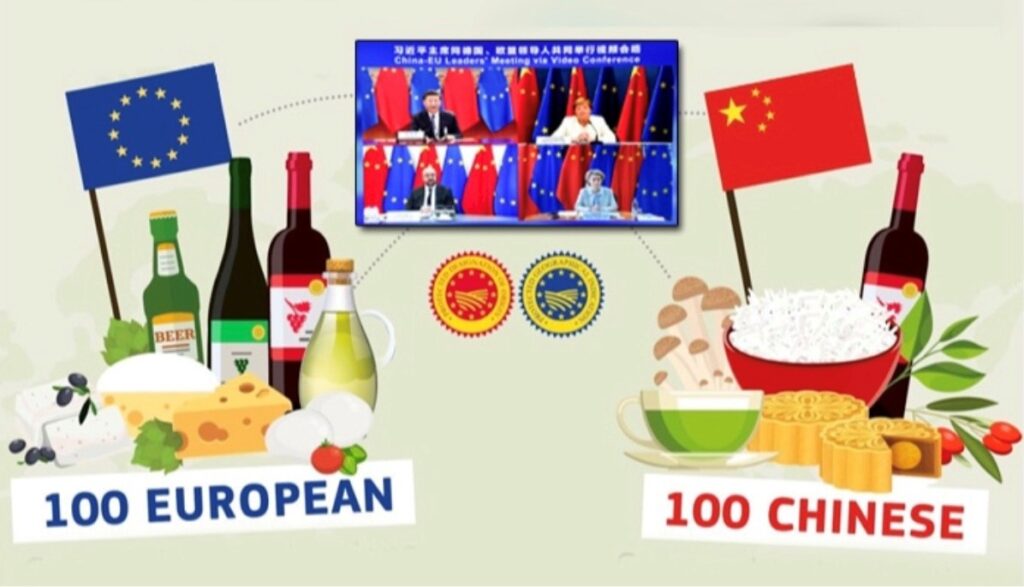
On 30 December 2020, China‘s President Xi Jinping, European Council President Charles Michel, European Commission President Ursula von der Leyen, German Chancellor Angela Merkel and French President Emmanuel Macron held a meeting by video conference. As the outcome of the meeting, China and Europe reached an agreement in principle on investment. This agreement will still have to be signed and ratified by the parties.
After seven years of negotiations, the China–European Union Comprehensive Agreement on Investment (Comprehensive Agreement on Investment (CAI)) was thus approved at the video conference that took place.
This landmark agreement underlines the rapprochement between China and the European Union and shows the importance of trust in the trade links between the two regions.
This new agreement is not merely a free trade agreement. It is a comprehensive agreement that enables European and Chinese companies to increase their investments and thereby facilitates greater economic integration. Today, the European (FDI) stock in China amounts to 150 billion euros, and the Chinese (FDI) stock in the European Union is 113 billion. Thanks to this agreement, these amounts may increase further.
Europe’s Objective
The EU’s main aim with regard to China is to make every effort to create all the conditions necessary for a rebalancing of the economy between the two markets. The European Union constitutes a vast market of 450 million in which foreign companies, including Chinese companies, can operate with very limited restrictions. By contrast, despite Beijing’s efforts to speed up reforms, the Chinese market is generally perceived by European companies as a very closed market.
With this agreement it will become easier for European companies to operate and invest in China.
With the momentum thus gained, a win-win partnership will be secured, since it will create new opportunities for businesses and allow consumers to benefit from a wider range of products and services.
A more open –Transparent– China
This agreement proves that China has embarked on an exemplary path towards opening up its economy further.
An important decision concerning subsidies. China will be more transparent about the subsidies granted to state-owned enterprises, but it will not give up these subsidies entirely.
Moreover, technology transfers between European and Chinese companies will not be compulsory.
On the other hand, European investors will be able to gain access to new economic sectors and develop their own businesses or acquire local companies with limited restrictions. The creation of a joint venture will not be a condition for the development of a European company in the Chinese market; further restrictions on the activities of European companies in China will be lifted in stages. In the tertiary sector, finance, some sectors of aviation, healthcare and even research and development will gradually be opened up to European companies.
By facilitating mutual investment, China and the European Union have reached their goal of building a strong business environment that will bring prosperity to both regions.
Sustainable and social development at the heart of the China-Europe agreement
The European Union and China stated that they share the same concerns about the fight against global warming and that it is an important item on the agenda. As major powers, they also reached an understanding to develop innovative solutions for the environment and thus to remain resolutely faithful to the Paris climate agreement in order to fulfil its commitments.
The CAI agreement addresses this question closely, and a working group will be set up to examine the progress made by the European Union and China in the field of sustainable development as well as social responsibility. Accordingly, China has promised to ratify the fundamental conventions of the International Labour Organization.
An Agreement Still in the Making
Some points of this extremely ambitious agreement will have to be finalised within two years of the signing of the agreement. Particular attention will be paid to the importance of the sensitivities concerning the protection of investments and dispute settlement mechanisms. The implementation of all the measures decided under this agreement will be monitored by a group of independent experts.
The agreement will also have to be approved by the European Parliament and enter into force at the end of 2022.
The Comprehensive Agreement on Investment and the Belt and Road
The agreement, long negotiated between the EU and China, will serve as a model for other investment agreements under the Belt and Road Initiative. The mechanisms developed to reduce the risk of disputes between economic partners will be a support programme that can be replicated, applied and developed with all Belt and Road countries in order to facilitate the development of new projects.
China’s transition to a more transparent, open and socially responsible economy will have some positive effects on Belt and Road projects. This will become more open to foreign and European investors.
Thanks to the recent trade agreements concluded by China, it is believed that Beijing will certainly help the recovery of the world’s economy, which is currently in a difficult situation. With the understanding reached on this agreement, we can see that China, taking an approach with an economy more open than ever, is committed to a more transparent approach.
Keywords: China European Council
Translated from the Turkish original.