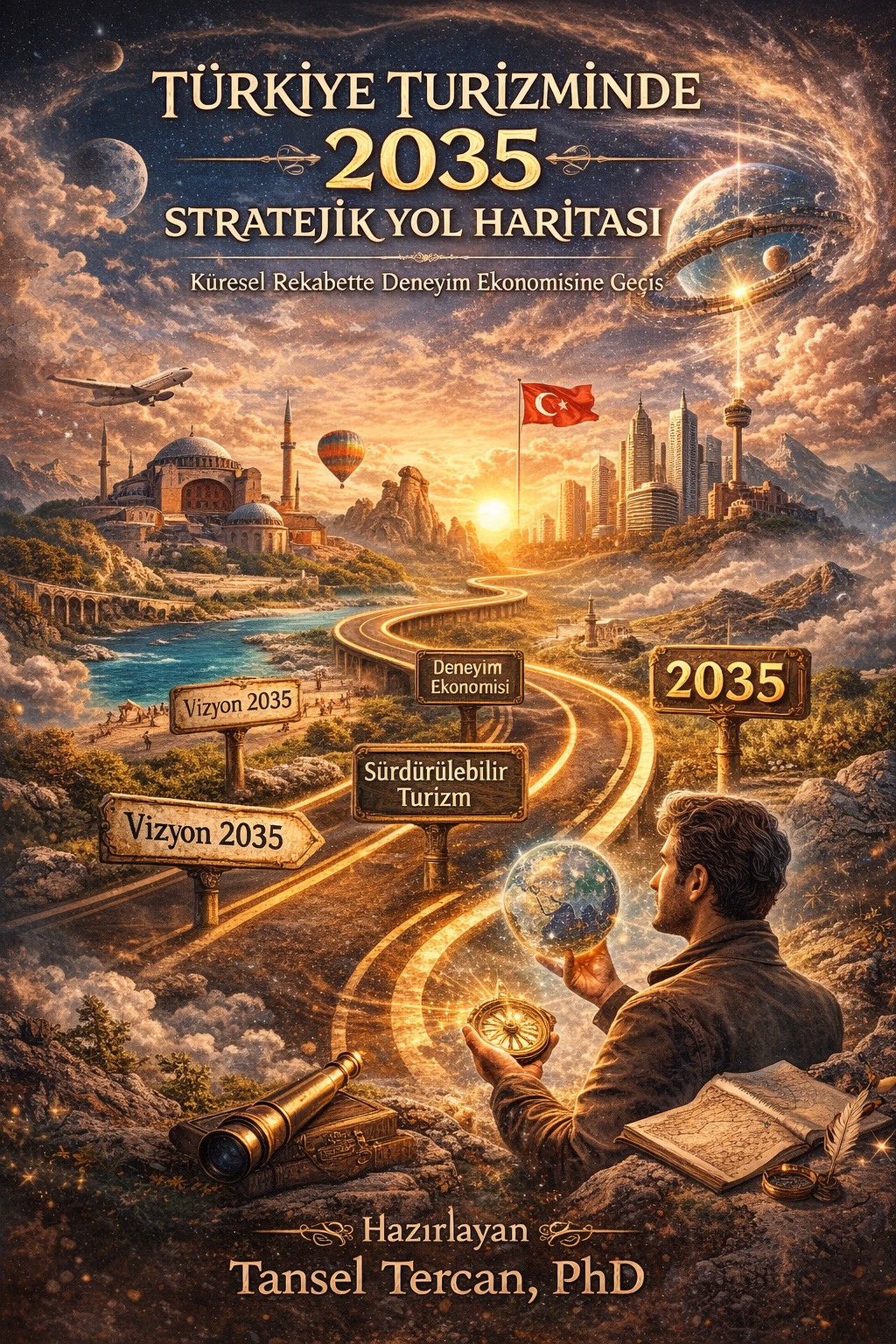
The tourism sector is undergoing a profound transformation on a global scale. For many years, competition in tourism was shaped by destination diversity, price advantage and bed capacity. Yet as we approach the second quarter of the 21st century, the dynamics of the sector are changing. The tourism success of countries is now measured not merely by visitor numbers, but by the experience value they create, their cultural depth and their capacity for sustainable revenue.
Thanks to its strong infrastructure, strategic location and multi-layered cultural heritage, Türkiye is one of the most important tourism countries in the world. Nevertheless, in the 2035 perspective the nature of global competition calls for a different approach to leadership.
For this reason, the critical question for Türkiye’s tourism is this…
How can Türkiye move from volume growth to value growth in tourism?
The Paradigm Shift in Global Tourism
World tourism is being reshaped along three fundamental axes of transformation.
- The Experience Economy: visitors are no longer seeking only a destination, but a personal experience.
- Meaning-Based Travel: culture, history and intellectual heritage are becoming an important part of tourism.
- Sustainable Value Creation: long-term destination value is gaining importance over short-term occupancy.
This transformation is also changing the role of tourism executives. Professionals must now manage not only operational performance, but also the narrative of the destination and the design of the experience.
Türkiye’s Strategic Advantages
Türkiye’s greatest strength in tourism competition emerges in three fundamental areas:
- Geographical Diversity: it is one of the rare destinations able to offer different climates, natural settings and life experiences within the same country.
- Layers of Civilisation: Anatolia possesses one of the densest cultural heritages in human history. Heraclitus, one of the important names of the ancient tradition of thought, lived in Ephesus and carried the concept of “change” to the centre of philosophy. This heritage offers a unique potential for cultural tourism.
- Cultural Depth: figures such as Rumi, one of the universal representatives of Sufi thought, make Türkiye not merely a tourism destination but also a geography of thought and wisdom.
Managing these advantages with a strategic vision can carry Türkiye’s tourism into a new phase of growth.
We Can Plan the Strategic Priorities for Türkiye’s Tourism as Follows…
The Transition from a Volume-Oriented Model to a Value-Oriented Model
For a long time the basic indicator of success in Türkiye’s tourism was the number of visitors. In the 2035 target, however, the main performance indicators should be the following.
- Tourism revenue per capita
- Average length of stay
- Experience spending
This approach will take tourism out of the “high volume – low value” cycle and carry it to a “high value – sustainable growth” model.
A Narrative-Based Destination Strategy
Successful destinations stand out not only for their physical beauty, but also for the meaning and narratives they carry. Strong stories are the most fundamental element that leaves a mark on the visitor’s mind, deepens the experience and differentiates the destination on a global scale.
Within the framework of the 2035 tourism vision, the cities of Türkiye can be positioned along the following narrative axes:
- Istanbul → The meeting point of civilisations
A universal stage of encounter with its multi-layered history, cultural pluralism and geographical uniqueness. - Cappadocia → The sculpture of nature and time
The symbol of experiential tourism with its geological formations, its silence and its timeless atmosphere. - Konya → The centre of philosophy and the inner journey
A unique point of reference for visitors drawn to spiritual depth, with its Sufi heritage and tradition of thought. - Ephesus → The city where ancient thought was born
An archaeological and cultural stage that carries the intellectual heritage of the ancient world into the present.
Slow Tourism and Destinations of Silence
One of the greatest paradoxes of the digital age is this: humanity is more connected than ever before, yet to the same degree mentally exhausted. This situation is strengthening a new orientation in global tourism: slow tourism.
Slow tourism is founded on moving away from speed, deepening the experience and establishing a more authentic relationship with place. In this context, Türkiye’s highland plateaus, coastal towns and natural landscapes hold an extremely strong potential for this trend.
Within the framework of this vision, Türkiye can be positioned along the following axes:
- Highland plateaus → Geographies where time flows slowly
Places of mental renewal with their natural rhythm, simple life and room to breathe. - Coastal towns → The quiet Mediterranean experience
Alternative destinations outside mass tourism, focused on privacy and tranquillity. - Natural corridors and national parks → Digital detox areas
The stage for experiences based on mindfulness and on freeing oneself from technological noise.
Hospitality Focused on Experience Design
The hotels of the future will not be merely places of accommodation. They will at the same time be centres of cultural experience, gastronomy laboratories, and platforms for art and thought. This approach transforms hotel managers from operations managers into architects of experience.
Gastronomy and Cultural Diplomacy
Gastronomy tourism will be one of the fastest-growing areas of tourism in the coming decade. The cuisine of Türkiye is one of the richest gastronomic heritages in the world, bringing together Anatolian, Middle Eastern, Mediterranean and Central Asian influences.
In the 2035 vision, gastronomy can play a strategic role in the following areas:
- City gastronomy routes
- International chef collaborations
- Gastronomy festivals
- Sustainable agriculture and local production
A Sustainable Tourism Ecosystem
The tourism leaders of the future must manage not only economic growth, but also environmental sustainability.
The critical areas for Türkiye in the 2035 perspective.
- carbon-neutral hotels
- sustainable destination management
- protection of natural areas
- integration of local communities into tourism
This approach will protect the long-term value of destinations.
A Global Brand Narrative
One of the greatest shortcomings of Türkiye’s tourism is the lack of a strong and consistent global narrative axis. Many countries have positioned their tourism brand around a single powerful message.
In the 2035 vision, a possible brand framework for Türkiye could be the following. “Türkiye: The Experience Geography of Civilisations” This narrative can position Türkiye not merely as a holiday country, but also as a field of cultural and intellectual discovery.
The New Leadership of Tourism…
Towards 2035, the understanding of leadership in the tourism sector is changing.
Successful executives are no longer merely people who manage financial performance. They are at the same time storytellers, experience designers and cultural visionaries.
For Türkiye’s tourism, real transformation will be made possible by a change of mental paradigm rather than by infrastructure investments. For in the future of tourism the most valuable asset is neither bed capacity nor the number of destinations. The most valuable asset is the story a country is able to tell the world. Türkiye has this story. The success of the 2035 vision lies in being able to tell this story to the world with strategic leadership.
Tansel Tercan, PhD
15/March/2026
Istanbul
Translated from the Turkish original.