From Kilimli, Zonguldak, to All of Türkiye: An Inquiry into Civilisation and Responsibility
By Dr. Nurfer Tercan
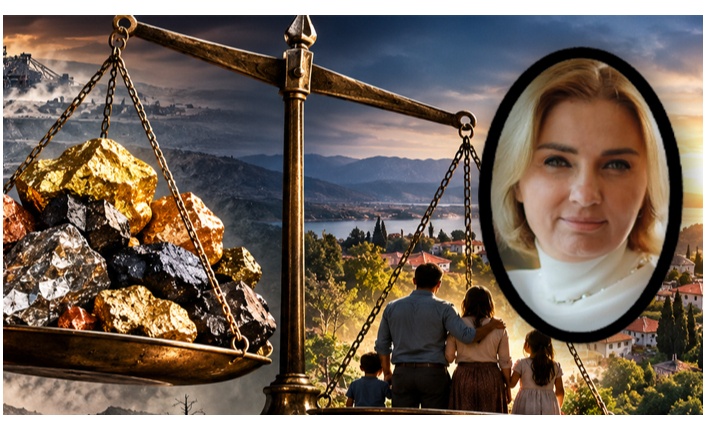
When the wealth beneath a country’s soil becomes more valuable than the human lives above it, it is no longer only mining that must be questioned, but that society’s very understanding of development.
Underground there is darkness. Yet humanity’s greatest darkness does not begin where there is no light; it begins where we ignore a danger we already know.
On 23 October 2026, a firedamp explosion in the town of Gelik, in the Kilimli district of Zonguldak, took the lives of 3 of our miners and injured 5 more. Two of the injured were reported to be in serious condition. They are no longer merely names mentioned in a news report; they are three separate life stories that should make a society question the value it places on working life, on the ethics of production and on human life itself.
Once again, an event that began hundreds of metres below the ground has left behind questions awaiting answers above it.
Why?
This question should not be asked only to investigate the physical factor that triggered the explosion. For explaining why methane gas exploded is one matter; understanding why people were caught inside that explosion is an entirely different one.
The first is a matter for engineering; the second is a matter for engineering together with management, law, economics, sociology and, ultimately, the conscience of society.
And Türkiye must now answer these two questions without separating them from each other.
Firedamp: A Danger of Nature, or a Risk Humans Fail to Manage?
Firedamp is a flammable and explosive mixture formed with air by methane gas released in underground coal mines.
Methane is colourless and odourless. It can be found in coal seams and in the surrounding rock strata. During mining operations it is released and mixes with the mine air. When the concentration of methane in the air reaches roughly 5 to 15 per cent and a suitable ignition source is present, an explosion can occur. This ignition source may be an electric arc, a mechanical spark, a hot surface or another energy source present under suitable conditions.
However, there is an important scientific distinction here.
The presence of methane is a natural geological phenomenon. The transformation of methane into a deadly explosion risk, however, is a process that must be managed through technical and institutional measures. Today, mining engineering knows under which conditions methane can accumulate, by which methods it should be removed and how dangerous concentrations can be detected.
Adequate ventilation, continuous gas measurement, automatic alarm and power cut-off systems, methane drainage, explosion-proof equipment and safe production planning are the applications of this body of knowledge.
Indeed, in its statement following the Kilimli explosion, the Chamber of Mining Engineers of Türkiye (TMMOB) also stressed that the firedamp hazard can be brought under control through scientific and technical methods.
So our fundamental question changes: if we know how the danger arises and we also possess the technologies to prevent it, why are we still living through the same grief?
The answer to this question cannot be sought only in the depths of the mines. Sometimes the answer may lie hidden in a production schedule, in a postponed maintenance decision, in a risk report that was disregarded, or in a working arrangement in which workers hesitate to object. These are not negligences proven to have occurred in Kilimli. But they are possibilities that must be investigated in every mining accident inquiry.
The Real Question Kilimli Asks Us
Following the explosion in Kilimli, the Zonguldak Chief Public Prosecutor’s Office launched an investigation, and a panel of expert witnesses was formed. Detention orders were issued for the owner of the operation and the occupational safety specialist. The precise technical causes of the incident and any responsibilities will be determined through the ongoing judicial and administrative inquiries.
Avoiding prejudgement during this process is a requirement of justice.
However, waiting for the investigation to conclude must not mean postponing the discussion of the structural problems of the mining system.
Kilimli should make us ask this question: before production begins in a mine, are all the risks assessed using scientific methods?
Are gas measurement systems present merely as equipment required by regulations, or do they function as a real safety mechanism capable of halting production when necessary?
When a worker sees danger, can they exercise the right to stop work without fear of losing their job?
Is inspection merely a check carried out on certain dates, or an inseparable part of the daily life of the mine?
And perhaps most importantly:
Is the success of an operation measured by the tonnes of coal it extracts, or by the presence of people who return home safe and sound at the end of every shift? For real productivity in a mine is not an increase in output achieved by economising on human life.
Real productivity is making safe production sustainable.
From Soma to Amasra: The Recurring Memory of Grief
The history of mining in Türkiye is not merely a history of extracting underground resources. It is at the same time a history of great labour, solidarity, technical progress and heavy losses.
Kozlu 1992, Soma 2014, Amasra 2022…
Different periods, different operations, different technical conditions and different chains of events. Reducing all these disasters to a single cause is not scientifically accurate.
Yet all of them remind us of a common and unchanging debate:
Does a society content itself with remembering the disaster it has lived through, or does it truly change its future by producing institutional knowledge from that disaster?
In sociology, collective memory is not merely the remembrance of what happened in the past. It is the way in which a society transforms these experiences into its shared values, institutions and behaviours.
Commemorating those we have lost on the anniversary of a disaster is of course important. But true social maturity is revealed by which risk was eliminated, which safety standard was developed and which institutional behaviour was changed in the wake of that disaster.
Commemoration ceremonies keep memory alive.
Preventive institutions protect life.
The lesson to be drawn from Kilimli should not be merely the recollection of past disasters.
Kilimli should be an occasion for Türkiye to re-evaluate its accumulated experience in mine safety.
Can a Country’s Development Be Considered Apart from Human Life?
Modern economics often describes production in terms of numbers.
Tonnes, capacity, cost, investment, growth, productivity…
All of these are necessary indicators of economic life.
However, an understanding of development that sees human beings merely as one element of the production process weakens its own moral foundation over time. The approach of the economist and philosopher Amartya Sen, who associates development with the expansion of people’s real freedoms, opens an important intellectual horizon here.
Development is not merely producing more.
It is people being able to lead safer, healthier, more dignified and more predictable lives.
A miner being able to return to their family at the end of the working day is not an emotional expectation lying outside economic development; it is one of the fundamental criteria showing the human quality of development. For the coal extracted from underground is meant to make life above ground easier.
To what extent can we judge the success of production that cannot protect life?
This is not an approach that rejects mining. Türkiye’s energy security, industrial production and the use of its underground resources are of course important. But energy security and worker safety are not alternatives to each other.
On the contrary, a sustainable energy policy cannot be built without safe mining.
Economic sustainability and the protection of human life are not rivals but two fundamental, complementary responsibilities.
Why Does Safety Not Advance as Fast as Technology?
Today we speak of artificial intelligence, smart cities, digital twins and autonomous systems.
We develop algorithms that can predict machine failures in advance. We can build three-dimensional models of underground structures. Through sensor networks, we can monitor temperature, gas concentration, airflow and equipment behaviour.
So to what extent are we carrying this technological knowledge over to mine safety?
When the readings of methane sensors, ventilation data, production activity and past risk records in a mine are evaluated in an integrated system, it may become possible to detect dangerous trends earlier.
AI-assisted systems can help identify unusual changes in these data.
However, an important misconception about technology must be avoided here.
Artificial intelligence is not safety itself; it is a tool that strengthens a properly designed safety system. An algorithm’s prediction cannot replace reliable gas measurement, adequate ventilation, automatic protection systems or a competent mining engineer.
Moreover, if sensors fail, data are incomplete or communication networks are cut, the system must continue to operate safely. For this reason, the future of mine safety in Türkiye must rest not only on digitalisation but also on strengthening safety culture anew together with engineering principles. Technology gains meaning only within a management approach that puts human life first.
How Can a New Safety Culture Be Built in Mining?
The issue that must be addressed after Kilimli is broader than the announcement of a new regulation. Türkiye needs to focus on an institutional structure for mine safety that is measurable, auditable and capable of continuous improvement.
To this end, six fundamental, complementary approaches stand out.
First, managing the danger before production. Methane drainage, geological risk analyses, control drilling and ventilation designs must be indispensable conditions of production planning. Production targets must not determine safety conditions; safety conditions must determine the limits of production.
Second, continuous and verifiable gas monitoring systems. Gas concentration should be tracked not merely at certain intervals but by continuous systems appropriate to the nature of the risk; at critical thresholds, alarm, power cut-off and evacuation procedures must be triggered reliably.
Third, independent and specialised inspection. Inspection mechanisms should assess not only the conformity of paperwork but also the real working conditions in the mine. The remedying of findings should be followed up, and recurring risks should be analysed systematically.
Fourth, the participation of workers in safety decisions. The first person to notice a danger underground is often the miner working directly in that environment. Taking workers’ risk reports seriously, protecting them and seeing them through to resolution should be regarded as an institutional obligation.
Fifth, cooperation between universities, the public sector and industry. Mining engineering departments, research centres, operators and the relevant public institutions should develop joint research programmes on gas monitoring, ventilation, emergency management and human factors.
Sixth, an institutional memory that learns from accidents. Sharing technical findings to an appropriate extent after every serious incident can enable operations facing similar risks to take precautions. The purpose of an investigation should not be limited to explaining what happened in the past; it should also show how the same incident can be prevented in the future.
At the heart of all this there must be a single principle: stopping production may incur an economic cost. But the loss of a human life can never be made good.
The Sociology of Darkness: The Worker’s Silence, the Institution’s Responsibility
One of the overlooked dimensions of mine safety is the sociology of working life.
An institution’s level of safety is measured not only by the devices it owns but also by its employees’ freedom to speak up about danger. If workers believe they will be punished for reporting a risk, even the most advanced technology may fall short.
When an engineer says that production must be stopped but is not sure that the decision will be backed institutionally, safety culture becomes fragile. When a manager judges success solely by daily production volume, they may unwittingly create an environment that encourages dangerous behaviour.
These possibilities are not accusations directed at any particular operation; they are structural risks highlighted by organisational sociology and occupational safety research.
The sociologist Ulrich Beck’s concept of the risk society is worth revisiting here. Modern society does not only produce wealth; new risks also emerge within production processes. Consequently, the measure of progress is not the claim that risk has disappeared entirely, but the capacity to manage it with scientific knowledge and public responsibility.
This is the real issue in mining as well.
Controlling methane underground is the engineer’s duty.
But creating a working order in which risk is not concealed, information is not suppressed and safety can be protected against economic pressures is the shared responsibility of all institutions.
One of the most important pieces of safety equipment in a mine is a person who is not forced to stay silent in the face of danger.
The Lesson of Kilimli: Is It Enough to Say “Never Again”?
After every great tragedy we utter the same sentence:
May it never happen again. This wish is a natural and heartfelt expression of being human. But wishes alone do not make a safety system.
For it never to happen again, we must measure.
We must inspect.
We must train.
We must share knowledge, investigate mistakes, change dangerous habits and be able to stop production when necessary.
The question to be asked after the loss of our three miners in Kilimli is not only what went wrong that morning.
The deeper question is this:
Which of the conditions that made that morning possible could have been known in advance, which could have been prevented, and which can be changed?
The scientific and institutional answer to this question matters not only for Kilimli but for the future of everyone who works underground in Türkiye. For a society’s level of development is understood not by the scale of the disasters it faces, but also by its will to learn from them and prevent their recurrence.
Zonguldak holds a special place in Türkiye’s memory of labour. The black of coal has seeped not only into the city’s soil but also into its literature, its folk songs, its family stories and the collective memory carried down through generations. There, mining is not merely a profession.
It is a way of life.
It is labour handed down from one generation to the next.
That is why the grief rising from Kilimli must not be seen merely as a regional matter.
It is a shared question about the order of values within which Türkiye will bring together people, labour, science and development.
And perhaps the most important question we must ask ourselves today is this:
Can we show the same determination in protecting the lives of those who extract the resources beneath the ground as we show in extracting those resources?
For civilisation is not measured only by how much wealth we can extract from the depths of the earth. It is also measured by how safely we can bring the people we send into those depths back into the light of day.
Coal can be extracted again. Production can start again. Economic losses can be made good over time. But a human life cut short can never be regained on any production balance sheet.
This is the heaviest and most valuable lesson Kilimli leaves us.
And let us not forget:
A country’s true wealth lies not in the minerals hidden beneath its soil, but in its people who can bring those minerals safely into the light of day.