We thought global and lived local. We picked the strategies of the creative societies in the world of globes according to our needs and tried to fit them to our own locality. On the designed stage of a globalizing world, as a society graduated from copy-and-paste études, we got lost, in the face of changing living conditions, in squares that are read as best forgotten. Birth, rise, collapse and disintegration; it generally develops together with its slow fading away, until the moment when utter confusion breaks out behind the curtains of chaos and uncertainty. In the process of collapse and dissolution, the dominant social institutions, even though they still wished to protect their internalized normals against the new normal, were inwardly dragged towards their own extinction. Now we are, with our eyes closed, in an unknown new world, inside a closed circuit that nothing can stop, a world that can take the place not of reality but only of itself.
This is the world of the limitless. The gleaming world of the Digital Golden Age lasts as long as a battery… This is the flat world where we have left the fixed places of our habits, surrendered to the days of virtual, dynamic, updating programs, and where we have one power socket’s worth of life left.
“The world is flattening. I did not start it. Nor is it possible for us to stop it without endangering the development and future of humanity. But it is in our hands to steer it in the right direction. Only then, when we wake up each morning, can we dream of beautiful things and set to work to make those dreams come true,” said Thomas L. Friedman, announcing with the last lines of his book that the world had flattened. The occasion that led him to the conclusion that the world is flat took place in the hall of Infosys Technologies Limited, at the conference of its CEO Nandan Nilekani.
Nandan Nilekani, CEO of Infosys Ltd., which stands among the leaders of India’s information technology world, is also known as one of the most respected captains of Indian industry. In February 2004 Friedman goes to India to interview Nilekani and tour the facilities. During his visit he saw that Infosys employees were preparing custom software for American and European companies, that the computer maintenance of large multinational companies based in America and Europe was also carried out there, that customer calls routed to this company from all over the world were answered, and that special research projects were conducted. In other words, he saw that the back-office operations of American and European companies were being performed here. For example, he learns that because investment research is a very costly business, many international firms, in order to reduce this cost, have their basic company analyses done in Bangalore.
What shocked Friedman and pushed him to brood at length over the future of the global world were these words of CEO Nilekani: “Outsourcing is just one dimension of a much more fundamental thing happening in the world today. In the past few years, especially in the bubble era, when hundreds of millions of dollars were invested in things like putting broadband connectivity around the world and laying undersea cables, a great deal of money was poured into technology. Meanwhile, computers were becoming cheaper and spreading all over the world. There was an explosion in software. Search engines such as Google (client server) and electronic mail were emerging. Proprietary software was being developed that made it easier to break a piece of work into small parts, send one part to Bangalore and another to Beijing, and do the same whole job at great distances from one another. When such developments suddenly came together around the year 2000, a platform was formed that allowed intellectual work, intellectual capital, to be sent from one place to another. Intellectual capital can now be broken into pieces, sent somewhere, distributed, produced and put back together again. This completely liberated the way we do our work, especially our intellectual production. What you see in Bangalore today is the result of all these developments coming together.” Thomas Friedman says that he came across the flattening of the world entirely by chance, and that it happened on this visit to India in February 2004. Friedman also relates that his meeting with CEO Nilekani ended with this sentence, which he has never been able to forget: “Tom, the playing field is being leveled.”
Nilekani also added that countries like India were ready to compete in global information technology as never before, and that America needed to prepare for this as soon as possible. CEO Nilekani gave Friedman the news that America would be challenged in the following way; that is, perhaps he meant to say, through Friedman, “America, here we come”? Nilekani said plainly, without mincing his words, that challenging America was a good thing for America, because America does its very best only when it is challenged.
Friedman also wrote that, as he was leaving the hospitality of the Infosys company and, along the potholed road, kept repeating in his mind the words “The game is being leveled, the playing field is being leveled. Flat? Completely flat? My God, he is telling me the world is flat, this CEO!”, he did not realize how he had reached the end of the road. At that moment, more than 500 years after Columbus set sail over the horizon, he recalls how Columbus, using the primitive navigation technologies of his time, went down in history with the route to India and with definite proof that the world is round. The year is 2004, and when India’s brightest engineers, educated at their country’s best technical institute and backed by the most modern technologies of the time, told Friedman that the world was flat, it made him feel that he had come down, flat, from the world of globes. With Friedman’s landing on the flat world, this development that brought CEO Nilekani happiness, a new milestone in the progress of humanity, the fact that they had flattened the world, the great opportunity they had won for India and the world, also brought Friedman’s own doomsday crashing down in full. Pointing to everything he had learned as “The Ten Forces That Flattened the World”, and even to his doomsday breaking loose, he did not neglect to write his book either. “The World Is Flat: A Brief History of the Twenty-first Century”, which led the bestseller lists in 2005 – now is exactly the time to review this book again!
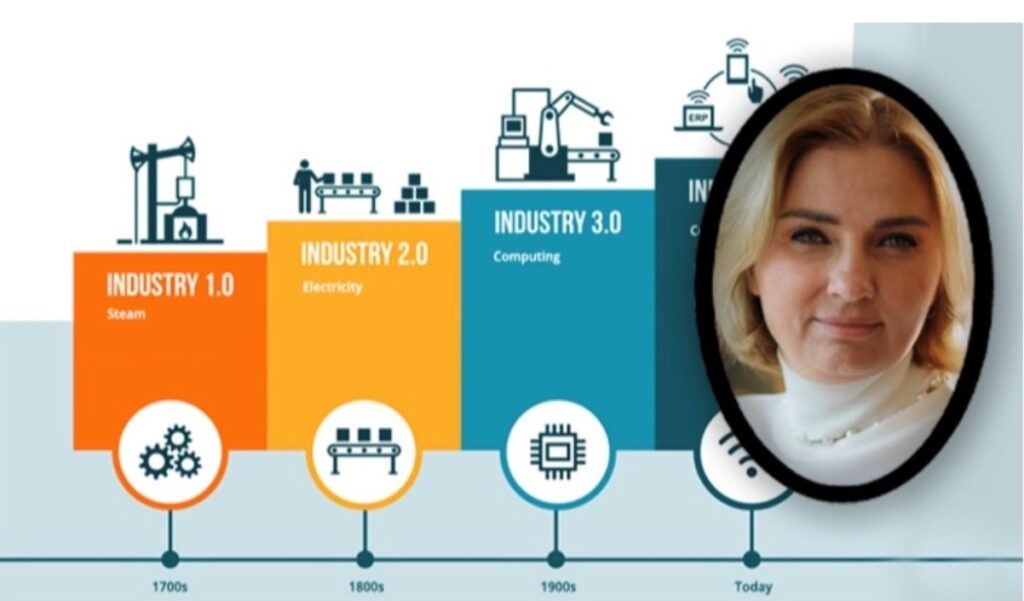
- Globalization 1.0 (the period from 1492 to the 1800s – the voyage of Columbus): In this era the driving force of the process of global integration was how much muscle power your country had and how creatively that power was used. The question of this era was: Where does my country stand in global opportunity and competition? How do I go global through my country and collaborate with others?
- Globalization 2.0 (the period from the 1800s to the 2000s – the Great Depression, the First and Second World Wars): In this era the driving force of global integration was multinational companies. With the development of the steam engine, railways, the telegraph, the telephone, personal computers, satellites, the internet and so on, the question of this era was: Where does my company stand in the global economy?
The Walls Came Down, the Windows Opened (Windows)! The fall of the Berlin Wall on 9 November 1989 did not merely liberate the peoples living under the rule of the Soviet Empire; it also tipped the balance of power against authoritarian, centrally planned administrations and in favour of democratic, consensual and free-market-based governance. The Cold War was the struggle of two economic systems, capitalism and communism. With the collapse of the Wall, there remained a single system to which everyone had to adapt in one way or another. More and more countries began to be governed from the bottom up. What gave direction to governments was the interests, demands and wishes of the people, not the interests of a narrow ruling group. Nothing could beat communism at leaving everyone equally poor. Capitalism, on the other hand, was making people rich unequally. Another country that tore down its walls in 1991 was India. Women’s freedom increases access to literacy, reduces fertility and infant mortality, multiplies job opportunities, develops political dialogue and, in the end, gives women the opportunity to govern themselves. The collapse of the Wall also led to the adoption of common standards. Almost everything was standardized, from accounting records and banking to PCs and how economic theses were to be written.
- Globalization 3.0 (the period from the 2000s to the present day): The driving force of this era, and the thing that gives it its unique character, is the new power that individuals have acquired to collaborate and compete at the global level.
Friedman calls the era of Globalization 3.0 the flattening of the world, but he also tried to convey that before long Globalization 4.0 would arrive as humanity’s new stage of development, that the flat world we cannot yet perceive would be made flat-out real for us, and that we would understand it as we lived it.
- Globalization 4.0 encompasses artificial intelligence, big data, automation, the virtual economy and other new geopolitical elements. Although this new period is called a stage of humanity’s development, it also brings with it certain difficulties such as economic inequalities, climate change and geopolitical tensions: the “Great Reset” – the “Green Deal”… etc. etc…
Along with Friedman’s flat world, let us also recall the words of Immanuel Wallerstein in an interview given in 2009: “We are in a cycle that has only just begun and will get even worse,” he said, noting that capitalism has gone through many ups and downs over the last five hundred years. But this time it is different, says Wallerstein: “We have entered a fundamental transition process that will last 50 years, and at the end of this process we will see that the existence of capitalism has come to an end,” and he adds: “None of us can predict what the new system will be like.”
We ate up and finished off Twenty Twenty in the time we spent at home. We learned that time flows away, that we have one power socket’s worth of life and a battery’s lifetime of breath. What remains from 2020 is that the tailor-made life of our world learned by rote will put on the new-generation Abnormal design… Wallerstein meant to say: “people will have to choose their sides and decide what kind of world they want. Because these choices will perhaps bring that order into being. This system, based on consuming and constantly accumulating, is nearing its end both ecologically and economically. Now, not a more global economy, as the thinkers of capitalism’s last century wrote, but a more global humanity will be born.”
Do you think this right of ours to choose can still be alive, with the mask, the distance and the disinfectant that turns us into the living dead?
Now is exactly the time to think!
Note: Who is Thomas Loren Friedman? He is an American political commentator and author. A weekly columnist at The New York Times, he has been crowned with the Pulitzer Prize three times. He has written extensively on foreign affairs, global trade, the Middle East, globalization and the environment.
Translated from the Turkish original.