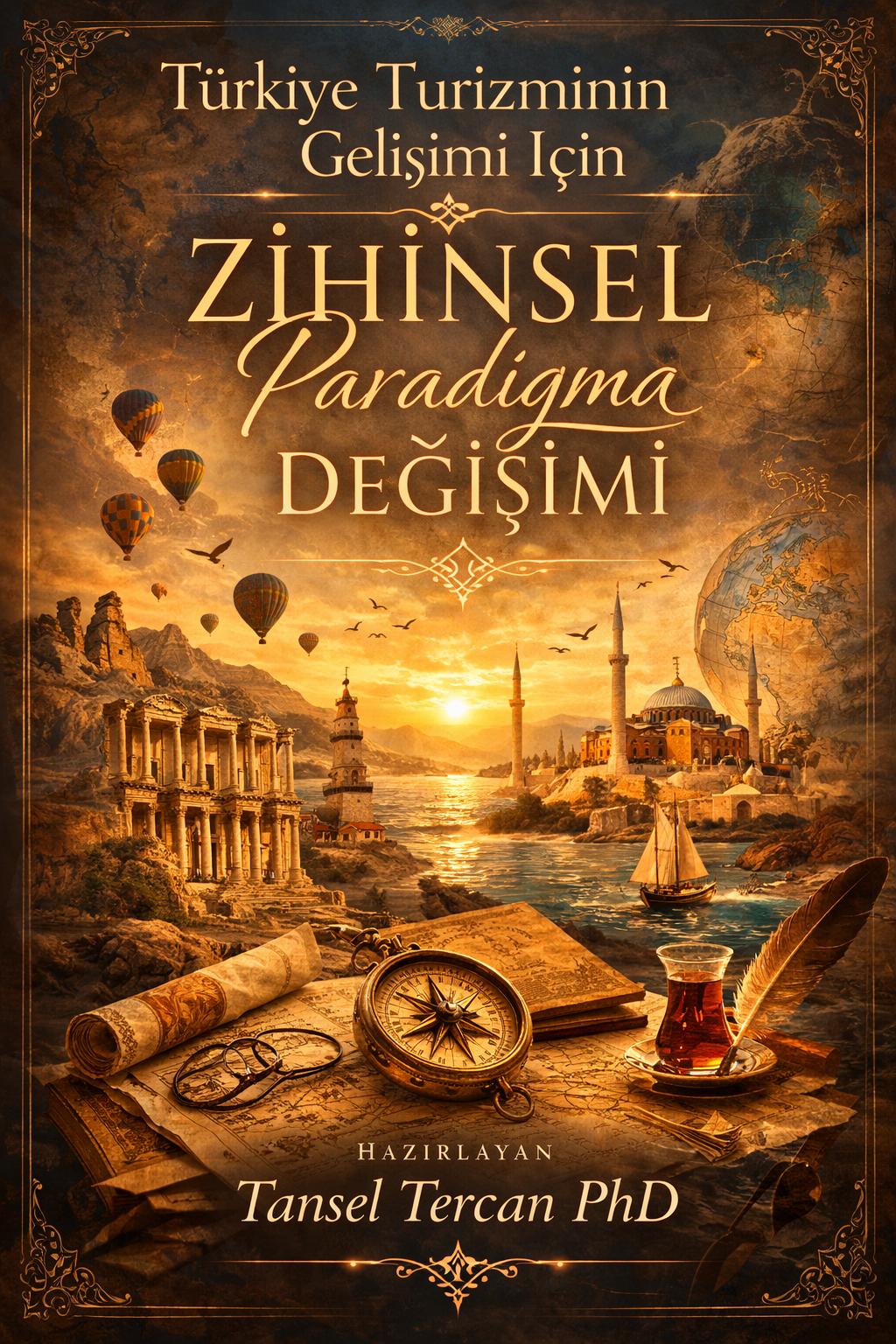
Tourism is most often told in numbers. The number of arriving tourists, overnight stays, occupancy percentages and per capita spending… Yet tourism is not merely an economic activity; it is also a cultural journey in which the human search for meaning takes shape through places. Türkiye’s tourism development, too, has mostly been assessed through such quantitative data. But a country’s real leap in tourism is made possible not merely by infrastructure investments or the opening of new destinations, but by its ability to grasp the spirit of place, the depth of time and the human desire for experience.
Türkiye’s tourism story is a story that has not yet been fully told. For this story does not consist solely of beaches, hotels and destinations. This story is the rediscovery of the meaning that civilisations have left behind, layer upon layer.
The Invisible Capital of Tourism: The Memory of Place
What makes a destination unique is not only its natural beauty. The real value lies hidden in the memory of that place. Türkiye is one of the geographies with the densest layers of civilisation in human history. Yet in tourism strategies this richness is most often presented through a superficial narrative. Ancient cities are toured, museums are visited, but the visitor is most often unable to experience the story of that place’s existence.
The tourism paradigm of the future, however, will be different. People will now travel not merely to see, but to understand and to feel. At this point a concept emerges that has not yet been sufficiently discussed for Türkiye.
“Spatial narrative tourism…”
In this approach, destinations are designed not merely as physical spaces, but each as a universe of stories. An ancient city does not consist of stones alone; those stones hold the paths walked by philosophers, the squares where trade was born and the moments of transformation in human history.
Türkiye’s true tourism value lies hidden precisely in this narrative power.
The Economy of Time: From Speed Tourism to Depth Tourism
For a long time modern tourism was built on “speed”. More destinations, less time, more intensive programmes…
But the human mind finds meaning in depth rather than in speed. The new generation of tourists no longer wants merely to see a destination; they want to become part of that destination’s rhythm. Instead of spending a few hours in a city, they want to experience that city’s morning, its evening and its everyday life.
For this reason a new concept emerges that has not yet been sufficiently discussed for Türkiye:
“Time-based tourism…”
In this approach, the value of destinations is measured by the qualitative intensity of the time the visitor spends in that place.
There is a great difference between spending a day in Cappadocia and waiting for the sunrise in Cappadocia.
And likewise between touring Istanbul and drinking Istanbul’s morning coffee…
The real transformation in Türkiye’s tourism strategy will be not so much keeping the visitor for longer as making that time more meaningful.
Silence Tourism: The New Luxury in the Age of Noise
One of the greatest paradoxes of the modern world is this. We are living in the most connected age in human history, but at the same time in its noisiest age…
Information, advertising, digital screens and constantly flowing content… The human mind is more tired than it has ever been. For this reason, one of the most valuable tourism experiences of the future will be silence.
Türkiye’s potential in this field, however, has so far hardly been discussed at all. The mountain villages of Anatolia, the quiet coves of the Aegean, the valleys of Cappadocia and the misty highland plateaus of the Black Sea are in fact “destinations of silence.”
We can build this new approach to tourism on three fundamental experiences:
- Digital detox destinations
- Meditation and contemplation routes
- Silence retreats
In today’s world, real luxury is no longer the crowd, but serenity.
Philosophical Experience in Tourism: The Geography of Wisdom
Türkiye is not merely a tourism country. It is also a geography of wisdom.
In these lands, thinkers such as Heraclitus, Thales of Miletus and Rumi shaped the intellectual heritage of human history. Yet this philosophical heritage has not yet been sufficiently integrated into tourism products.
And yet a new field is rising in the tourism of the future:
“Philosophical tourism…”
In this model, visitors discover not only destinations, but ideas as well.
For example:
- Ancient philosophy walks in Ephesus
- Experiences of Sufi thought in Konya
- “Silence and existence” retreats in Cappadocia
Tourism can thus turn from an entertainment activity into a journey of personal transformation.
The Design of Human Experience: The New Art of Tourism
One of the greatest misconceptions of the tourism industry is this. Destinations are thought to be the product. Yet in reality what is sold in tourism is not the place, but the experience. The value of a hotel is not so much the size of its rooms as the memory it leaves in its guest’s mind. For this reason, the tourism leadership of the future is no longer merely operations management, but also experience architecture.
We can develop this approach in three dimensions:
- Emotional experience
- Cultural connection
- Creating a personal story
Türkiye’s real competitive advantage in tourism is its capacity to bring these three dimensions together.
The Future of Tourism: The Economy of Meaning
One of the most important transformations of the 21st century is the rise of the economy of meaning. People no longer merely buy products; they seek an experience of meaning. A city gains value not merely because it is beautiful, but because it touches the soul. It is precisely here that the future of Türkiye’s tourism will take shape.
This country is one of the rare places that hold the elegance of nature, the depth of history and the diversity of culture within the same geography.
But the real value of this potential will emerge only when this question is answered: “What does Türkiye’s tourism want to make people feel?”
The Quiet Revolution of Tourism…
Tourism is no longer merely a sector. It is the way in which human beings rediscover the world and themselves. Türkiye’s real leap in tourism will be made possible not by building more hotels, but by designing deeper experiences. For in the future of tourism the most valuable thing is neither the sea, nor the sun, nor architecture. The most valuable thing is meaning…
And the place where meaning is born most often lies hidden not on maps, but in a person’s inner world. Türkiye’s tourism story is not yet complete. In fact, perhaps it is only just beginning.
Tansel Tercan, PhD
15/March/2026
Istanbul
Translated from the Turkish original.