The Road Whose Symbol Is “Silk” Has Iraq as Its Target
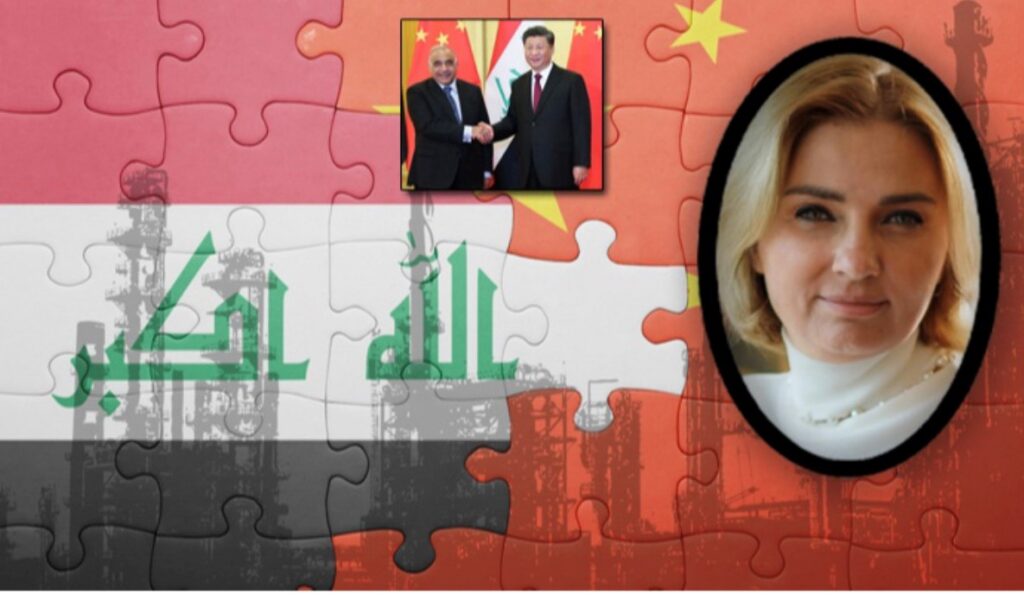
China is rescuing Iraq with a long-term, cash-upfront deal for oil!
Iraq is preparing to sign a multibillion-dollar contract with China’s ZhenHua Oil Co., under which it will receive money upfront in exchange for long-term oil supplies.
The deal is the latest example of China, through state-controlled trading companies and banks, lending to struggling oil producers such as Angola, Venezuela and Ecuador, with repayment in the form of barrels of oil instead of cash. The fall in oil demand and prices has strained Iraq’s budget, and the government is struggling to pay salaries.
According to those familiar with the matter, SOMO, the Iraqi agency responsible for oil exports, chose ZhenHua. According to one of the people, the Iraqi cabinet must still approve the deal. Cabinet spokesman Hassan Nadhim said on Tuesday that the offers were being examined and would go to the prime minister for approval.
Under the terms of a letter that SOMO sent to oil traders last month, the winning bidder will receive 4 million barrels a month, or about 130,000 barrels a day. According to Bloomberg calculations, they will pay upfront for one year of supply, and at current prices this will bring in more than 2 billion dollars. The deal runs for five years in total – but the prepayment is for one year only.
According to the people, the deal attracted great interest among the leading names in the oil trading sector. The deadline for the tender was extended from the end of November in order to give market participants more time to submit bids.
ZhenHua Oil did not respond to an e-mail seeking comment sent to its headquarters in Beijing after normal working hours.
All the major producers have taken a blow this year from the crash in oil triggered by the coronavirus. But Iraq, where crude oil makes up almost all government revenue, is in a worse position than most. According to International Monetary Fund forecasts, its gross domestic product will contract by 12% this year, more than that of any other OPEC member under a production quota.
The government is struggling to pay teachers and civil servants, many of whom have taken to the streets in protest in recent months.
Additional Conditions
Energy-rich countries whose revenues are constrained have often relied on prepayment deals to raise money, but Baghdad has not done so until now. The semi-autonomous Kurdistan Regional Government in northern Iraq has used similar contracts in the past, just like Chad and the Republic of the Congo.
In a prepayment deal, the buyer of the oil effectively becomes a lender to the country. The barrels are the collateral for the loan.
The prepayment part of Iraq’s contract ranks among the largest in recent history, but it is less than the record 10 billion dollars that Russia’s state-owned Rosneft raised in 2013 from the trading companies Vitol Group and Glencore Plc.
Besides its size, the deal allows the winner to ship Iraqi crude wherever it wishes for one year. Normally, Middle Eastern crude is sold with strict clauses that prevent traders and refineries from reselling the barrels to different regions.
This condition was probably seen as advantageous enough to offset the fact that the prepaid money is effectively interest-free for Iraq. Normally, a country pays a return on the cash it receives.
Reviving China
ZhenHua is engaged in oil production and trading. Although it is relatively little known outside China, the company has played a major role in Beijing’s so-called “globalisation” policy for energy. ZhenHua has invested in oil concessions in the United Arab Emirates, Kazakhstan and Myanmar, and trades crude oil from countries such as Kuwait, Brazil and the Republic of the Congo.
The company was founded in 2003 as a subsidiary of the Chinese state’s largest defence contractor. According to its website, ZhenHua trades about 1.3 million barrels of oil and finished products a day.
Other major Chinese traders include Unipec, Chinaoil and Sinochem. These state-owned firms, shrouded in relative secrecy in the past, are gaining in importance as China’s oil consumption grows. It will soon overtake the US as the world’s largest importer of crude oil.
A brief reminder:
There are 65 countries in the project, including Türkiye. These countries are listed region by region as follows:
*East Asia: China, Mongolia
*Southeast Asia: Brunei, Cambodia, Indonesia, Laos, Malaysia, Myanmar, the Philippines, Singapore, Thailand, Timor-Leste, Vietnam
*Central Asia: Kazakhstan, Kyrgyzstan, Tajikistan, Turkmenistan, Uzbekistan,
*Middle East and North Africa: Bahrain, Egypt, Iran, Iraq, Israel, Jordan, Kuwait, Lebanon, Oman, Qatar, Saudi Arabia, Palestine, Syria, the United Arab Emirates, Yemen
*South Asia: Afghanistan, Bangladesh, Bhutan, India, the Maldives, Nepal, Pakistan, Sri Lanka
*Europe: Albania, Armenia, Azerbaijan, Belarus, Bosnia and Herzegovina, Croatia, Czechia, Estonia, Georgia, Hungary, Latvia, Lithuania, Macedonia, Moldova, Montenegro, Poland, Russia, Serbia, Slovakia, Slovenia, Türkiye, Ukraine.
In 2021 we shall write more about how, under the conditions of the Digital age, the New Generation’s New Middle corridors, railways and the new agreements on sea routes will come to life in the Block Chain that can be seen at the bottom of the ocean.
Keywords: China Kazakhstan Venezuela
Translated from the Turkish original.