Have You Heard from the Scientists Who Tell You to Wear a Mask Every Day That Playing with DNA Could Be Dangerous?
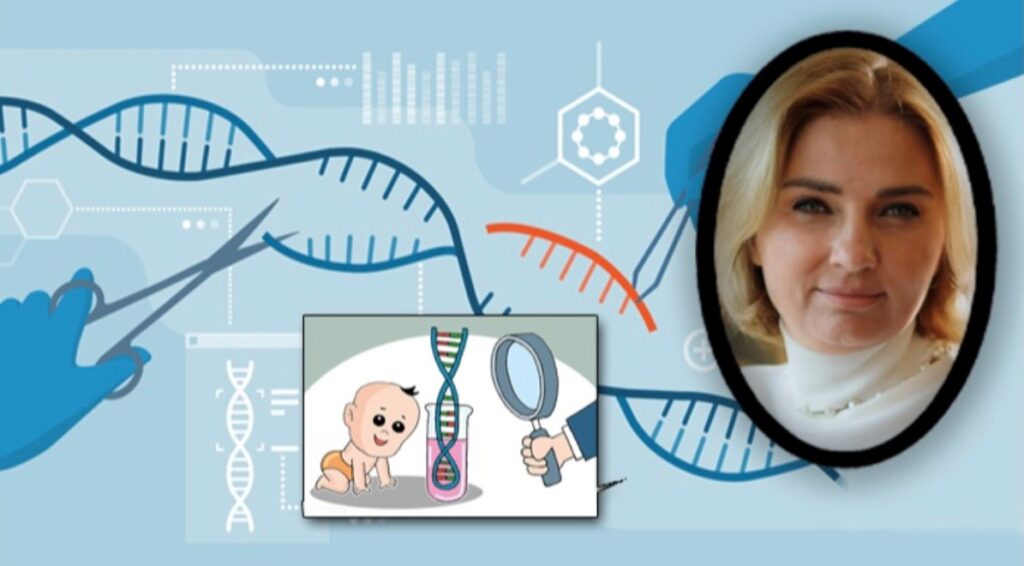
We are now in the last days of drowning in news of the pandemic that has left its name and its mark on 2020, dragging on and on until it snaps. We have all now become health experts, phytotherapists, the household healer, and have even begun researching mRNA studies. Without looking at whether all the information flying through the air is right or wrong, we try to catch every piece of it.
“Is it in order to understand, or in order to say: let there be news, whatever it may be?” We are inside the net of information hunting, not knowing what our aim is. We are faced with a great danger: information pollution… There is also the risk of getting lost and vanishing in the net of every piece of information flying about! This information poisoning is far graver than the question of the virus and the vaccine… Of course, this situation has a positive side as well: it has triggered the love of wisdom within everyone.
On the morning of 6 October 2020 we woke up to the news that women had left their mark in the scientific categories of the Nobel Prizes, which had completed their 120th year. Emmanuelle Charpentier and Jennifer A. Doudna were deemed worthy of the Nobel Prize in Chemistry for their efforts in developing the Crispr-Cas9 genome editing technique.
The chemical structure of DNA was discovered by Rosalind Franklin, Francis Crick and James Watson in the early 1950s. This great step was the beginning of the possibility of improving human genes through chemical modification. What was being witnessed was in fact the greatest sudden rise of the science of genetics. Franklin, Watson and Crick broadened the horizons of scientists for the treatment of diseases of genetic origin and also prepared the doors through which the world of medicine could move swiftly towards other discoveries. It could even be called the most miraculous method of finding a cure for the hereditary diseases of the world.
The fact that scientists, with the support of technology, work on new information every day leads to more causality, curiosity and research. There are many reasons on this earth for bringing out the human capacity for thought. As scientists accelerated their research, science became, in some cases, open to debate. In the end, we believe in science only as the hope of humanity, with its virtuous side that saves lives and makes life easier… On the other hand, we are faced with an entirely different, dark world of science, one of weapons, war and the destruction of humanity, which says: how can we bring about the end of the world sooner and escape to Mars? Is science chaos or order? Is it sometimes trying to reach the uncertain through virtue, or is it merely putting what has been discovered into practice in a way devoid of ethical and moral values? Like being able to see the line where the night ends and the morning begins, it is both hard and plain to tell apart. To move forward with faith in science has become an increasingly complicated matter.
Of the French microbiologist Emmanuelle Charpentier and the American biochemist Jennifer Doudna, these scientists who work on CRISPR(*) and have made important contributions to science, can we say that they have earned the “Nothing Will Ever Be the Same Again” prize? Where should we begin to think: from the hopeful side of the coin, from the dark side we can never see, or from its uncertain inner surface?
Claes Gustafsson, Chair of the Nobel Committee for Chemistry, said in his statement: “This genetic tool, which affects us all, has extraordinary power. This technology has not only revolutionised basic science, it has also contributed to the development of new products and will pave the way for the development of ground-breaking new medical treatments.”
Of course we were delighted by this miraculous news. On behalf of humanity! It now meant an end to such insoluble problems as Cancer, the Treatment of Blood Diseases, the Treatment of HIV, Blindness, the Treatment of Cystic Fibrosis and Huntington’s Disease!
Although the existence of CRISPR clusters has been known since the 1980s, their role in the defence mechanism of the organism has been proven only relatively recently. The research leading to this conclusion began in 2005 with the discovery made by 3 different groups working on CRISPR genes. What these groups discovered was that the spacer genes found in CRISPR clusters had the same sequence as some of the viruses that infect that organism. Moreover, having a spacer gene with the same sequence as a virus’s DNA conferred resistance to that virus. Naturally, from this arose the hypothesis that the CRISPR system might be a nucleic-acid-based immune mechanism, and as a result of the research carried out we can say that today this hypothesis has largely been confirmed.
- Its history begins about thirty years ago. The gene region called CRISPR was first found and published in 1993 by Francisco Mojica, working at the University of Alicante in Spain. By the mid-2000s Mojica had found that these repeating sequences matched sequences in the genomes of bacteriophages, and in 2005 he put forward the hypothesis that they were part of the adaptive immune system of the bacterium Streptococcus pyogenes. In this period, in parallel with Mojica, other independent groups also reached the same conclusion (Pourcel et al. 2005). In 2005, Alexander Bolotin of the French National Institute for Agricultural Research (INRA), while working on the genome of Streptococcus thermophilus, discovered the enzyme that shows nuclease activity and that we today call the Cas9 enzyme. He showed that there was a repeating motif at the ends of the sequences called spacers, which bear a high similarity to viral genes. In 2013, Feng Zhang of MIT showed that this system could be used for genome editing in eukaryotes.
So was the Nobel Prize the first time the world had heard of this incredible discovery? Let us recall here that we read and passed over one of the most astonishing news items of 28 November 2018. There must have been those who went into shock at this information from the world of science under the headline “The News of the CRISPR Babies May Be More Terrifying Than You Think.” In China, a researcher named Jiankui He was announcing that they had brought into the world babies whose genes had been altered. At the Second International Summit on Human Genome Editing in Hong Kong, He Jiankui announced that he had edited the genome of Lulu and Nana (twin girls), who had been born in China. They thus managed to write their names into history as the first reported humans to come into the world with DNA modified using the CRISPR-Cas9 technique.
When we read this information, the first thing that comes to mind is the Wuhan National Biosafety Laboratory, of whose existence we in fact had no idea until a year ago and which has come to overshadow even its own country. Inevitably so: the Wuhan National Biosafety Laboratory is a project of major international scientific and technological cooperation within the framework of the Cooperation Agreement between China and France on the Prevention and Control of Emerging Infectious Diseases, directly witnessed and promoted in 2004 by the presidents of both countries. A large science facility that fills the gap in China’s biosafety system and responds to major biosafety threats. After officially going into operation, it will carry out research on newly emerging viruses and natural focal viruses, including the Ebola virus, such as rapid detection systems, molecular epidemiology, the aetiology of infectious diseases, therapeutic antibodies, and the evaluation of vaccines and drugs, as well as assessment of biological risk factors. It thus forms a biosafety platform in China for emerging and proliferating infectious diseases in terms of the isolation and identification of the pathogen, the establishment of infection models, vaccine development, biological containment and research on the mechanism of interaction between pathogen and pathogen.
“The overall aim of the project is to carry out work as a high-level biosafety laboratory in Wuhan, based on a martial-law system and open to a limited extent to domestic scientists, forming a relatively independent research platform capable of investigating two or three kinds of fulminant infectious agent. It develops disease pathogens and the related vaccines. This is also so that timely measures may be taken against the weakness whereby, where China’s public health emergency response system is deficient, adequate and effective technical support and drug reserves are lacking. It will play a fundamental and technical supporting role in the prevention and control of the main new infectious diseases in China, thereby meeting the nation’s major strategic demand and bringing important scientific questions to light. The laboratory will be a base for research into the measures to be taken for the prevention and control of emerging diseases in China, a preservation centre for virus seeds, a WHO reference laboratory and a focal point for the disease network, and will ultimately become a core. At the same time, within China’s emerging disease research network, it can effectively increase China’s ability to prevent and respond to biological warfare and terrorist attacks and ensure China’s biosafety.”
Let us draw all this information together with this brief reminder. “The first Covid 19 case in Europe was seen in France on 25 January 2020. Having received the news on 26 January that the number of cases in China was 769, WHO Director-General Tedros travelled to China on 27 January 2020 to meet Chinese officials.
(*) CRISPR is a cluster of DNA sequences. Clustered regularly interspaced palindromic repeats are segments of prokaryotic DNA containing short repeated base sequences. Each repeat is followed by short segments of “spacer DNA” originating from a bacteriophage or plasmid to which there was previous exposure.
Translated from the Turkish original.