“Kazakhstan joins the World Logistics Passport as the hub for Central Asia”
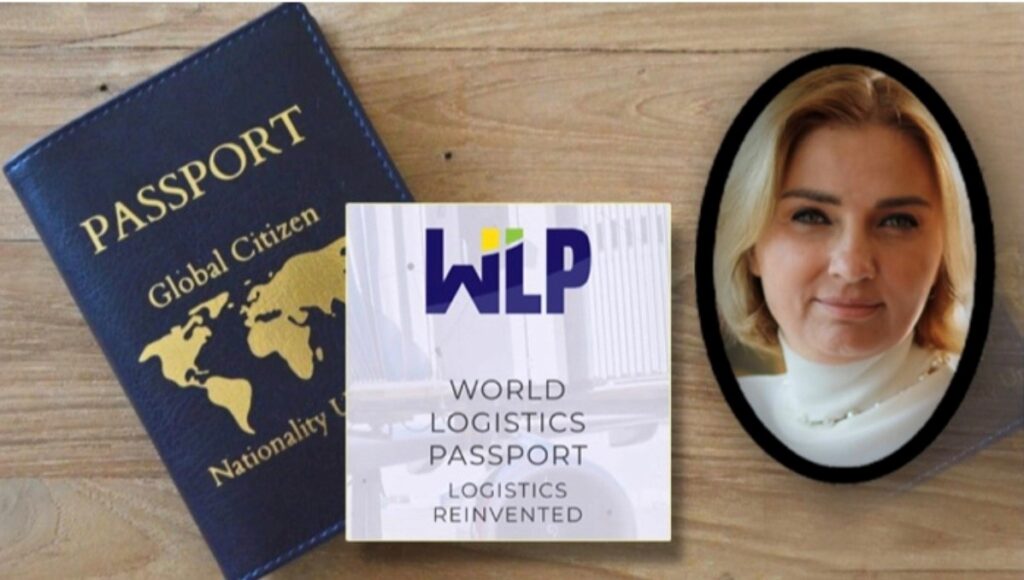
Dubai Customs had announced that on 14 October 2019 it launched the World Logistics Passport as part of the first phase of the Dubai Silk Road strategy, in order to help enhance the role of the Dubai Silk Road and increase demand for Dubai’s products, services and integrated transport systems.
Its announcement, made under the heading of a unique initiative, pointed to the infrastructure of this system, which will strengthen the role Dubai Customs plays in regional and international trade. The initiative was announced by His Highness Sheikh Hamdan bin Mohammed bin Rashid Al Maktoum, Crown Prince of Dubai and Chairman of the Dubai Executive Council, who described the implementation of the Dubai Silk Road strategy as the beginning of a new phase of economic growth that will further enhance Dubai’s position as a global economic and business hub with its exceptional connectivity and logistics services.
The World Logistics Passport offers a range of unique operational and financial advantages for businesses and shipping companies by linking together government bodies, including Dubai Customs and Dubai Trade, with logistics service providers such as DP World and Data, including the facilitation of commercial transactions between the relevant institutions in Dubai.
On 21 December 2020, Kazakhstan too announced that, in order to strengthen its position as a trade hub for Europe and Asia, it had joined the World Logistics Passport (WLP), announced by Dubai as its major initiative to increase trade opportunities between emerging markets.
Bakhyt Sultanov, Kazakhstan’s Minister of Trade and Integration, and Sultan Ahmed bin Sulayem, Chairman of the Dubai Ports, Customs and Free Zone Corporation, signed a Memorandum of Understanding.
By creating the world’s first logistics loyalty programme for freight companies, the WLP is intended to create opportunities for business and government to actively improve existing trade routes and develop new ones. By removing trade barriers such as the logistical inefficiency that currently limits the growth of trade between emerging markets, it will enable a systemic solution to be reached.
Since countries in Asia, Africa and Latin America depend on developed countries for their exports and trade and depend relatively little on one another, the WLP is expected to bring ease and speed to these regions in diversifying their trade in existing products and in increasing their market shares in key products as well as in other emerging ones.
Under the leadership of Kazakhstan’s President Kassym-Jomart Tokayev, Kazakhstan is the third country, after Colombia and Senegal, to formally join Dubai in sharing expertise to facilitate the flow of trade worldwide. Brazil, Uruguay and South Africa are also among the countries officially registered as partners of the WLP.
For Kazakhstan, joining the WLP is intended to create the opportunity to diversify the country’s exports and imports from Europe and China to the growing markets of Latin America and Africa. Commenting on the announcement, Sultanov said; “Kazakhstan stated that there is a linked system between the Belt and Road Initiative and the World Logistics Passport. This will open up new opportunities in the field of transport and logistics and reveal the country’s full transit potential. Almaty will be Kazakhstan’s key logistics hub. He also underlined the importance of the fact that the city’s strategic location holds significant potential for increasing Kazakhstan’s share of trade between China and Europe.
“Almaty has also taken on the role of a gateway that provides access to markets in the region such as the Eurasian Economic Union, the Shanghai Cooperation Organisation and the Economic Cooperation Organization, and that stands between these markets and the partners of the World Logistics Passport. Almaty airport will become an air transport hub offering a wide range of world-class services. Membership of the World Logistics Passport has systematised Kazakhstan’s access to less-used markets. The country’s strategic location continues to bring ease and speed to its largest city, Almaty, in increasing its share of trade between China and Europe by rail.”
Bin Sulayem, for his part, said; “Trade is a vital part of economic development, and the addition of Kazakhstan to the World Logistics Passport will accelerate the growth of the future economy. With Dubai’s logistics expertise at its core, the WLP has helped to redesign how goods and services move around the world, to increase resilience in global supply chains, and to remove all obstacles to the development of trade that is as prosperous as possible for countries like Kazakhstan.”
From the details in the statements by Sultanov and Bin Sulayem, we can understand with full clarity that the Silk Road, the Symbol of the New Generation, passes through its indispensable Central Asian element, the “Nurly Zhol (Nurlu Yol – Нұрлы жол – The Bright Road of Kazakhstan)”. From this we can also read in which direction and in which system Türkiye will take its place as of 2021…
Keywords: Silk Road Logistics World
Translated from the Turkish original.