The Silk Road of the New Generation
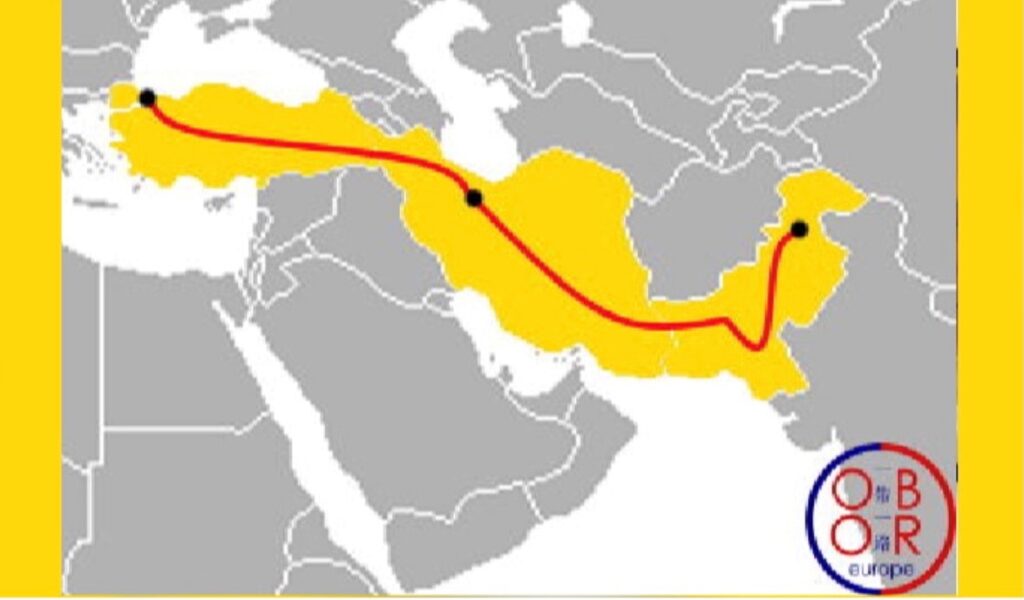
Officials in Türkiye, Iran and Pakistan have agreed to relaunch the transport service linking Istanbul, Tehran and Islamabad and to increase connectivity from the Eastern Mediterranean to South Asia. With the revival of this railway line, as a result of the development of the Belt and Road Initiative launched by China, the Silk Road, the most important Symbol of history, is turning greener and greener once again.
The Istanbul-Tehran-Islamabad line
The Istanbul-Tehran-Islamabad (ITI) railway first entered service on a trial basis in 2009. However, the sanctions on Iran, together with the effect of the lack of investment in infrastructure and of insufficient trade, made it difficult to sustain and develop this project. In early 2020 Türkiye, Iran and Pakistan announced that the line was returning to service; but because of the Covid19 crisis this was postponed . In December 2020, at the Meeting of the Ministers of Transport and Communications of the Economic Cooperation Organization (ECO) in Istanbul, the three countries decided to maintain this line, with service to begin in 2021. This route will be 6,500 km long, one of the longest routes in the region. The journey from the west of Türkiye to the centre of Pakistan could take only 11 days, which makes this route a reliable and fast alternative to transport by sea.
ITI (Istanbul – Tehran – Islamabad) and ECO
ITI is a major project developed by the Economic Cooperation Organization (ECO). This regional organization was founded in 1985 by Türkiye, Iran and Pakistan to increase regional trade and integration. In 1992 Afghanistan, Azerbaijan, Kazakhstan, the Kyrgyz Republic, Tajikistan, Turkmenistan and Uzbekistan joined ECO. Despite its ambitious goals, ECO faced many difficulties that prevented the organization from reaching its initial objectives. War and Instability in Pakistan were for a long time a major obstacle to prosperity in the region. The sanctions against Iran dissuaded some companies and governments from development work on regional initiatives.
With ITI, Iran can gain regional visibility and once again become a hub between Europe, the Middle East, Central Asia and South Asia.
ITI (Istanbul – Tehran – Islamabad) and BRI (Belt and Road Initiative)
The development of the Belt and Road Initiative (BRI) since 2013, and the fact that Türkiye, Iran and Pakistan have actively embraced the Chinese programme, have given ITI a new perspective.
China and Pakistan have updated all their agreements with the pledge to develop their relations and to build the China-Pakistan Economic Corridor (CPEC) together. One aspect of this corridor concerns the modernization of the transport infrastructure in Pakistan: new motorways and railways are planned under this programme. Although a possible rail link between China and Pakistan has still not been decided on, other railway projects between Pakistan’s major cities are under construction. In December 2020 Islamabad and Beijing were holding talks on the ML-1 projects, which consist of the doubling and modernization of the railway line between Karachi and Peshawar.
Many railway lines in Pakistan have not been restored for almost a century, and serious improvement is needed to make rail transport faster and more reliable. Pakistan’s railway line connecting Quetta in Balochistan to Mirjaveh in Iran (ML-4) in particular remains vulnerable. All the plans have been made for it to be turned into a safe transport route in the face of this situation.
At the same time, China is increasingly opening the Belt and Road to other countries. It encourages non-Chinese companies, too, to invest in Belt and Road projects. The renewal of the ITI line will not be financed entirely with Chinese funds. Under the agreement that has been made, Türkiye, Iran and Pakistan are obliged to attract regional and foreign firms to this programme. But once the line enters service, it will become an important corridor for economic development, creating new opportunities in cities and Special Economic Zones in the three countries.
Which goods will be carried?
With this new railway line, Türkiye, Iran and Pakistan are positioning themselves as an important hub between Europe and Asia. But this new freight line will also increase connectivity and trade among the three countries. Regional trade is limited. For example, only 1.26% of Pakistan’s exports go to Türkiye and less than 0.1% to Iran.
To bring this to life, Pakistan, Iran and Türkiye will need to coordinate their economic policies better, so that local companies will use this new line.
A new road to China?
This new line will acquire its full meaning only when it is connected to Chinese territory, and will thus increase trade from Türkiye to Xinjiang. China is today one of the largest trading partners of Türkiye, Iran and Pakistan. This new line will develop and increase this trade even further.
Regional Openness
The line will also open up new regions and cities in Türkiye, Iran and Pakistan to foreign companies. European companies have begun to put their projects into practice for the formation of new markets, in order to develop new ties in the three countries.
While America is preoccupied with its own troubles, it is of course also following the rapid developments in the Gulf. All the plans have been made in response to the negative reactions to the news of the “solidarity and stability agreement” that came from the opposite shore of the Gulf on 5 January 2021. As for the news brought by the Silk-like Wind passing through the Gulf: it was the re-establishment, announced by Saudi Arabia’s Minister of Foreign Affairs Faisal bin Farhan Al Saud, of diplomatic relations between Qatar and four Arab countries through the ‘solidarity and stability agreement’.
The reason for all the developments between China, Türkiye, Iran and Pakistan, whether they appear positive or negative, is very clear! In order to be able to anticipate the measures directed at these negative developments in the background, we have written many times on this platform, in great detail, about the position of the 65 countries on the Road of the New Generation whose Symbol is Silk, and about its transit corridors. Another clue is the recent work and decisions to accelerate the Shanghai Cooperation Organisation (Shanghai Cooperation Organisation), or, by its other best-known names, the Shanghai Five and the Shanghai Pact.
With the agreements it made in 2017, Qatar had turned the Silk-like road of the New Generation Green. As of 5 January 2021, in order to make the Belt and Road, the new order of the New World, greener still, Qatar brings Saudi Arabia, Bahrain, Egypt and the United Arab Emirates to its side as well; who knows whom and what else it will bring in the days ahead – we shall wait and see.
Keywords: COVID19 Türkiye New World
Translated from the Turkish original.